
NZ Tax Return Deadline 2026: Key Dates & Penalties Guide
If you file your own New Zealand tax return for the year ending 31 March 2026, the usual filing deadline is 7 July 2026. But that date doesn’t apply to everyone, and if you use a registered tax agent your deadline can move out to 31 March 2027, with the final tax payment date shifting too.
If you’re a business owner, sole trader, or property investor, this is usually the point in the year when the low-level worry starts. You know “7 July” is somewhere in the mix, you’ve heard “7 February” from someone else, and then another person says their accountant gets them until March. No wonder people get stuck.
The main problem with the NZ tax return deadline is that people talk about it like there’s one date. There isn’t. There are different rules depending on whether you file yourself, whether you have untaxed income, whether you use a tax agent, and in some cases, what your balance date is.
That Approaching Feeling The NZ Tax Deadline
A lot of people leave this until the pressure becomes hard to ignore.
You might be sitting at the kitchen table with a laptop open, a folder of receipts beside you, and a vague plan to “sort tax this weekend”. Or maybe you own a rental, run a small company, or do a bit of contracting on the side, and you’re not even sure whether you need to file an IR3 at all.
Why 7 July is only part of the story
For many self-filers, 7 July 2026 is the standard deadline. That’s the key date many remember. But treating it as the only date is where trouble starts.
A landlord, for example, might correctly file by July, then assume any tax owing can be paid later when cash flow feels easier. A sole trader might hear a friend say their accountant files in March and think the same rule applies to everyone. A company owner with a non-standard balance date might assume 7 July applies to them when it doesn’t.
Practical rule: The NZ tax return deadline isn’t one date. It’s a sequence of deadlines based on how you file and what type of taxpayer you are.
If tax feels confusing, that’s normal. The IRD system makes more sense once you separate filing from paying, and self-filing from using an agent.
Key NZ Tax Return Deadlines for 2026
The New Zealand tax year usually runs from 1 April to 31 March. For the tax year ending 31 March 2026, the standard self-filer rule is simple: file by 7 July 2026 and, if you owe residual tax, pay it by 7 February 2027 .
2026 NZ Tax Deadlines at a Glance Standard 31 March Balance Date
| Who It Applies To | Filing Deadline | Terminal Tax Payment Deadline |
|---|---|---|
| Individual self-filer with untaxed income | 7 July 2026 | 7 February 2027 |
| Sole trader filing personally | 7 July 2026 | 7 February 2027 |
| Company with standard 31 March balance date filing personally | 7 July 2026 | 7 February 2027 |
| Trust with standard 31 March balance date filing personally | 7 July 2026 | 7 February 2027 |
| Taxpayer using a registered tax agent | Covered in the next section | Covered in the next section |
Filing date versus payment date
This catches people out every year. Filing your return and paying the resulting tax are not the same thing.
If you file your own return, you send the return in by 7 July 2026. If the return shows tax still to pay, that final bill is generally due on 7 February 2027 for self-filers, not on filing day.
A practical example helps. Say you’re a property investor with rental income and deductible expenses. You pull everything together, file your IR3 in June, and learn there’s a balance still owing. You’ve done the filing part. You still need to deal with the payment part by February.
One more wrinkle businesses often miss
Not every business uses a standard 31 March balance date. Some use a 31 December balance date, and that changes the filing deadline. For those entities, the due date can be 1 May, not 7 July, as noted on the Government guidance on end-of-year income tax assessments.
If provisional tax is also part of your world, it helps to understand how those dates fit around year-end obligations. This guide on provisional tax in NZ is a useful next read.
The Tax Agent Advantage Extending Your Deadline
Using a registered tax agent changes the calendar in a very practical way.
Instead of racing toward July, eligible taxpayers can get an Extension of Time. That pushes the filing deadline from 7 July 2026 to 31 March 2027, and the terminal tax payment date from 7 February 2027 to 7 April 2027.

Why that extra time matters
Extra time isn’t just a comfort thing. It gives you room to get the numbers right.
That matters if you have rental statements, loan interest records, shareholder drawings, mixed-use expenses, or bookkeeping that still needs tidying up in Xero. It also gives you a longer runway for cash flow planning, especially if you know there may be tax to pay.
Getting more time often means making better decisions, not just delaying paperwork.
When a tax agent makes sense
A tax agent is often worth considering if:
- Your income isn’t simple and includes rent, contracting, dividends, or business income.
- Your records need work because receipts, coding, or bank reconciliations aren’t fully up to date.
- You want clearer deadlines so you’re not trying to remember which date applies to filing and which applies to payment.
- You’d rather avoid avoidable mistakes and have someone check the return before it goes in.
If you’re weighing that up, this article on whether it’s worth using an accountant is a sensible place to start.
Understanding Penalties and Interest Charges
The most expensive tax mistakes are often the boring ones. Not bad deductions. Not aggressive positions. Just missed dates.
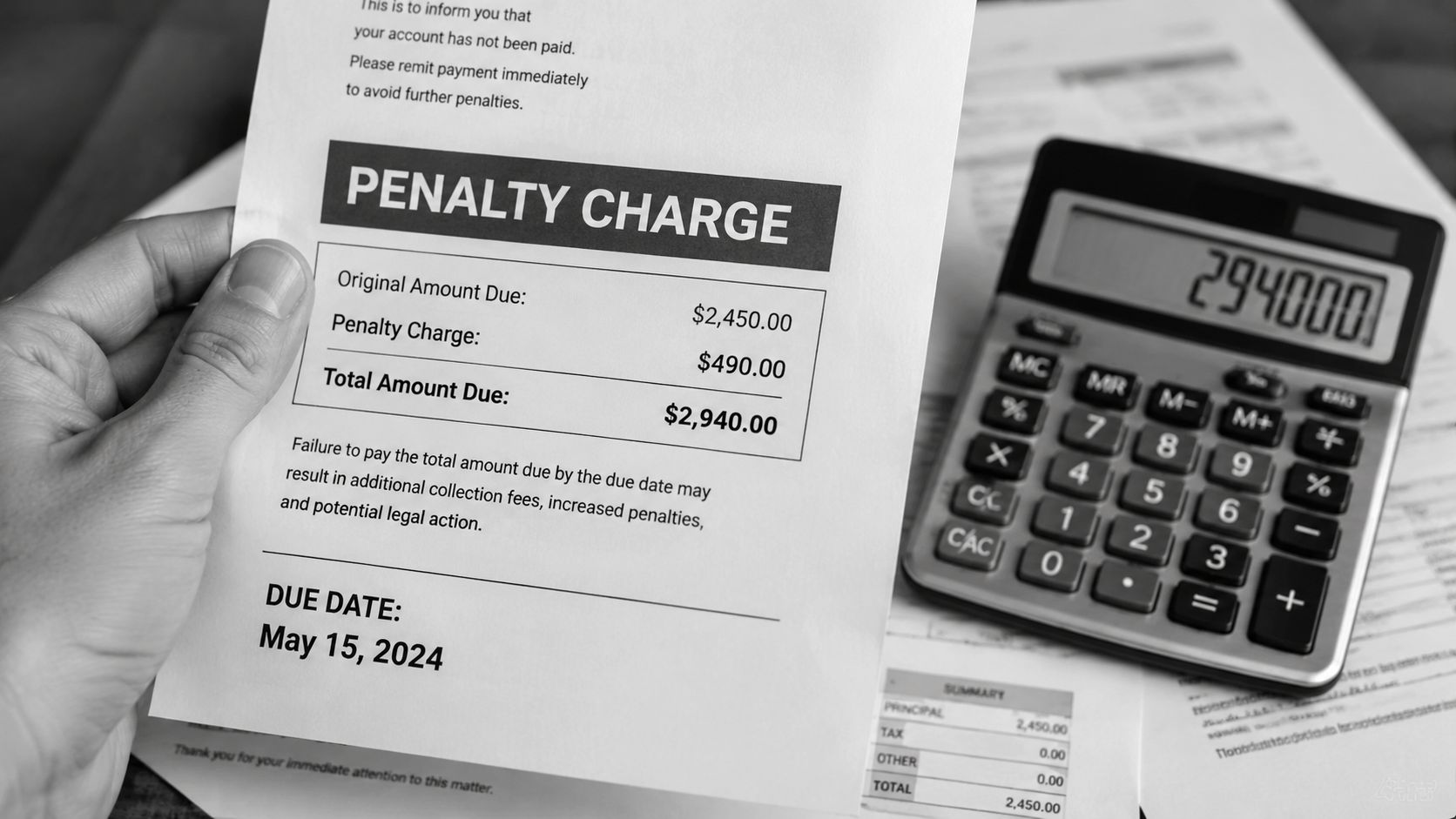
Many self-filers get caught because they assume the payment deadline matches the tax-agent deadline. It doesn’t. Thousands of taxpayers are penalised each year for missing the 7 February residual tax payment, often because they mistakenly think they have until 7 April. The same source notes late payments can attract a 1% initial penalty, plus a 4% penalty after 7 days.
Two different mistakes, two different problems
It helps to separate these:
- Late filing means the return itself isn’t submitted on time.
- Late payment means the return may be filed, but the tax bill isn’t paid by the due date.
A common example is a sole trader who files correctly in July, gets busy over summer, and forgets the February payment date. The filing was fine. The payment wasn’t.
Why systems matter
Good admin saves real stress. A proper calendar, clean bookkeeping, and a workflow that flags tax dates early can make a big difference.
If tax debt has already built up, the best move is usually to act early rather than avoid it. This guide on managing Inland Revenue tax debt covers practical next steps.
Missing a tax date is usually fixable. Ignoring it is what turns it into a bigger problem.
Your Practical Filing Checklist and Timeline
The easiest way to handle the NZ tax return deadline is to treat it like a short project, not a last-minute scramble.
The IRD starts processing income tax assessments between May and July, and refunds are often paid in July if the information is correct, according to this tax refund timing guide. That’s why it pays to start gathering records soon after 31 March.
A simple timeline that works
April
- Download core records from bank accounts, loan accounts, and Xero.
- Collect income details such as rent received, invoices issued, interest statements, and dividend records.
- Set a decision date on whether you’ll self-file or hand it to an accountant.
May
- Sort expenses into clear categories and match receipts where you can.
- Review property records if you own rentals, including rates, insurance, repairs, and interest documents.
- Check for missing items like donations, logbooks, or home office records if relevant.
June
- Review the draft position and ask questions before anything is filed.
- Fix bookkeeping issues while the year is still fresh in your mind.
- File early if ready so you’re not pushing against the deadline.
Your document checklist
Some people work best with a list they can tick off. Keep these together:
- Income records including PAYE summaries, invoices, rent records, and interest statements
- Expense support such as receipts, bills, subscriptions, and insurance
- Property paperwork for rates, mortgage interest records, repairs, and management fees
- Business records from Xero, spreadsheets, or your point-of-sale system
- Other tax items like donation receipts or government support details if relevant
Common Questions and Your Next Steps
Some tax questions come up again and again because the rules sound simple until your own situation is dropped into the middle of them.

FAQ
Do I need to file if all my income is PAYE?
Not always. If all your income has been taxed correctly through PAYE, you may not need to file an IR3. But if you earned more than $200 of untaxed income, you’re legally required to file an IR3 by 7 July 2026 unless you have an agent, as explained on IRD’s 7 July campaign page.
What counts as untaxed income?
Common examples include rental income, partnership income, or sole trader income. Interest can also fall into the conversation depending on how it was taxed before you received it.
Are GST deadlines the same as income tax deadlines?
No. GST and income tax are separate obligations, with different filing cycles and due dates. Don’t assume one date covers both.
What should I do if I know I’m going to miss the deadline?
Act early. Get your records together, work out what’s missing, and get advice quickly. The sooner you deal with it, the more options you usually have.
If you’re confused, that doesn’t mean you’re behind. It usually means you’ve reached the point where getting proper help will save time.
The key takeaway is simple. The “NZ tax return deadline” depends on whether you file yourself or use a tax agent, and confusion usually happens when people mix up the filing date with the payment date.
If you want calm, practical help with IR3s, rental property tax, company accounts, or staying on top of IRD deadlines, Business Like NZ Ltd is a strong place to start. They’re affordable, down-to-earth Chartered Accountants supporting Auckland businesses and property investors who want more financial freedom, more time away from business admin, and less stress around tax and compliance.