
Management Accounts vs Financial Statements: NZ Guide
One Auckland trade business looked profitable at year-end and still felt broke most months. The problem wasn’t sales. It was that the owner was relying on the rear-view mirror with financial statements instead of understanding the difference of management accounts vs financial statements when what the business needed was a dashboard.
The Profitable Business That Was Running Out of Cash
An Auckland trade business came to review its numbers because the owner was doing solid work, invoicing regularly, and still feeling constant pressure around cash. The year-end accounts showed a profitable business. On paper, nothing looked badly wrong.

Monthly management accounts told a different story. Once labour was tracked properly, one service line was losing money. The overall result hid it. The owner was effectively working harder to stay under pressure.
That’s the practical difference in management accounts vs financial statements. One shows what has happened after the fact. The other helps you spot what needs fixing while there’s still time to act.
A profitable business can still run short on cash if margin, timing, and job mix aren’t being watched during the year.
The response wasn’t dramatic. Pricing was reset, job scoping tightened, and the owner started reviewing internal numbers regularly. For businesses that need tighter short-term visibility, tools like SaaS cash flow management can also be useful because they force attention onto near-term cash movement, not just annual profit.
The Rear-View Mirror Understanding Financial Statements
Financial statements are the formal year-end reports prepared for compliance and external users. In New Zealand, they’re a statutory obligation for many entities under the Companies Act 1993 and related reporting standards, while management accounts are internal reports used for decision-making and aren’t filed with regulators, as explained in this overview of management accounts and statutory reporting in New Zealand.
Who they’re for
These reports are mainly for outsiders and formal requirements:
- IRD and tax work. They support income tax, GST, and year-end filing work.
- Banks and lenders. They help with lending reviews and covenant discussions.
- Shareholders or directors. They provide a formal record of performance and position.
- Other stakeholders. Depending on the entity, that can include investors or compliance reviewers.
What they do well
Statutory accounts are useful when you need a clean historical summary. They usually include the profit and loss, the balance sheet, and supporting notes. If you want a plain-English refresher on one of those core reports, this guide on what a balance sheet is and why it matters is a good place to start.
They also force discipline. If the bookkeeping is messy, the year-end process exposes it quickly. That’s why regular bank recs matter. If you need a practical Excel-based reference for how people streamline financial reconciliations, it helps to see the logic laid out clearly.
Practical rule: Financial statements are essential. They’re just not built to answer, “What should I do next month?”
The Dashboard Using Management Accounts for Decisions
Management accounts are for owners. They’re the dashboard. They’re produced monthly or quarterly and they answer the questions that affect your next decision. Are we making money right now? Where is cash getting tight? Can we afford to hire? Which jobs or clients are dragging us backwards?

What belongs in a good management pack
A useful management pack usually includes items you won’t see in statutory accounts, such as:
- Gross margin by service line or job type
- Debtor days and overdue invoice ageing
- Cash runway
- Wages as a percentage of revenue
- Owner drawings versus sustainable profit
Those numbers matter because they show whether the business model is working in real life, not just whether the books can be finalised at year-end.
A strong management pack also changes the conversation. Instead of talking only about tax, dividends, and what already happened, owners start asking better questions. Can we afford this equipment? Should we put prices up? Are we carrying too many slow-paying customers?
For a practical list of measures worth watching, see these financial KPIs for small business. The best KPI set isn’t the one with the most lines. It’s the one that helps you decide what to do next.
Key Differences at a Glance
Here’s the simplest way to look at management accounts vs financial statements.
| Attribute | Management Accounts | Financial Statements (Statutory Accounts) |
|---|---|---|
| Purpose | Internal decision-making | Compliance and formal reporting |
| Audience | Owners and managers | IRD, banks, shareholders, external parties |
| Frequency | Monthly or quarterly | Usually annual |
| Regulatory status | Not filed with regulators | Required for many entities |
| Time horizon | Current trading and near-term decisions | Historical performance over the year |
| Format | Flexible and business-specific | Formal and standardised |
| Focus | Cash flow, margin, working capital, trends | Year-end position and reporting accuracy |
Same numbers, different job
Take wages as an example.
In statutory accounts, wages sit as a total expense for the year. That’s fine for compliance. It tells you what was spent.
In management accounts, wages become a decision tool. You might review wages as a percentage of revenue, compare crews or service lines, or check whether overtime is chewing through margin. That’s the same underlying cost, but it’s being used in a completely different way.
Why owners get confused
Owners often lose confidence when the management reports and year-end accounts don’t seem to match. Usually that’s not because anyone is hiding anything. It comes from timing differences, missing accruals, coding errors, stock adjustments, or a chart of accounts that doesn’t map neatly from operational reporting into year-end reporting.
If your dashboard says one thing and your year-end accounts say another, the issue is usually process, not the idea of management reporting itself.
That’s why the question isn’t which report matters more. You need both. One helps you steer. The other records where you ended up.
From Dashboard to Year-End a Practical Workflow in Xero
The part most articles skip is the bridge. Businesses don’t need two competing versions of the truth. They need internal reporting that is useful during the year and close enough to statutory results to support GST, tax, and year-end work. That reconciliation gap is a common issue in New Zealand.
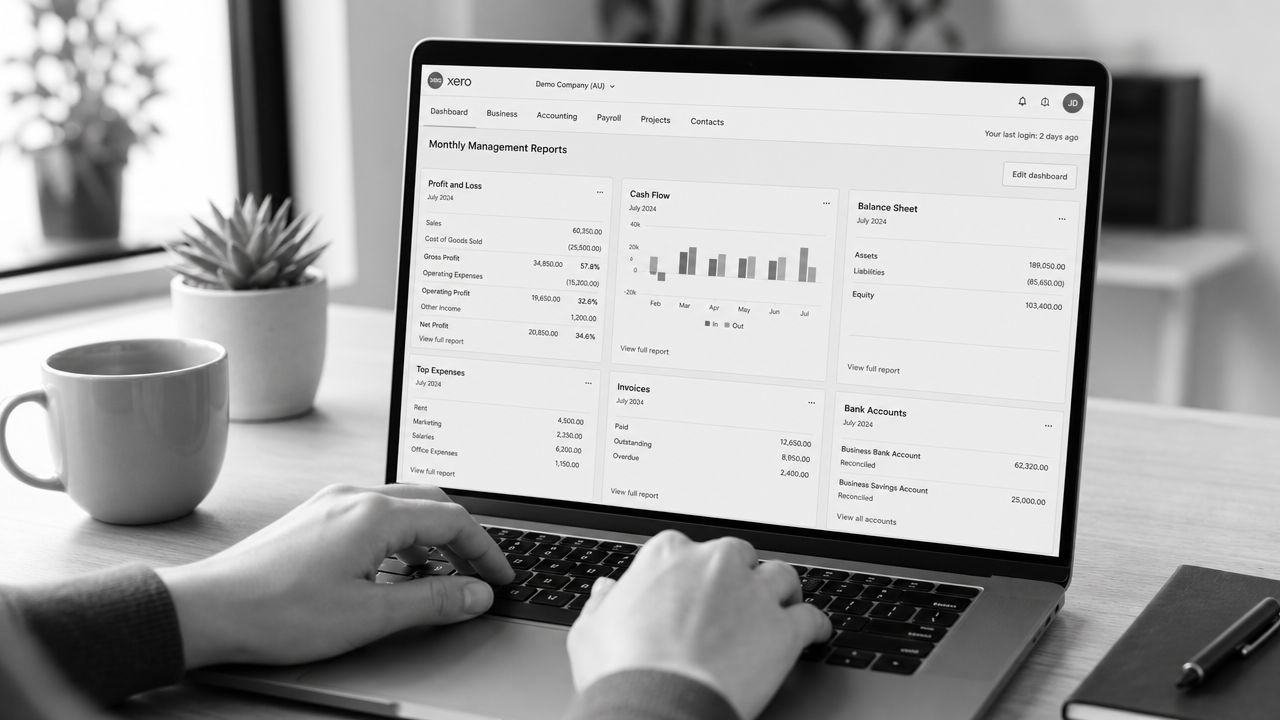
What works in Xero
If you’re using Xero, a few habits make a big difference:
- Keep the chart of accounts tidy. Don’t create overlapping expense codes that mean different staff post the same cost in different places.
- Reconcile bank accounts regularly. Don’t leave problems sitting there until year-end.
- Post accruals and prepayments during the year. If you only do this once a year, monthly reporting becomes less useful.
- Review debtor balances and unpaid bills. Cash issues often start there.
- Use tracking categories carefully. They’re helpful for service lines, branches, or property-level reporting, but only if people use them consistently.
What doesn’t work
What fails is the “we’ll sort it out later” approach. That usually creates reports that look clean at a glance but don’t hold together when tax, GST, or year-end adjustments arrive.
A firm like Business Like’s Xero support for small businesses can help. The value isn’t in pushing more reports out of software. It’s in setting up a process where the monthly dashboard and the annual rear-view mirror tell the same story.
Checklists for Your Business and How We Can Help
Good reporting only helps if it leads to action. Most owners don’t need more paperwork. They need a simple rhythm that keeps the numbers useful.

Small business owner checklist
- Review margin regularly. Look at service lines, job types, or product categories.
- Watch debtors closely. Slow collections can hurt a healthy business.
- Compare drawings to profit. Owners often take cash faster than the business can comfortably support.
- Check wages against revenue. Labour creep is common and easy to miss.
- Write down the month-end routine. If your team needs help, this guide to practical process documentation is a useful starting point.
Property investor checklist
- Track each property separately. Portfolio averages can hide weak performers.
- Review repairs and maintenance patterns. Some costs are one-off. Others signal an ongoing issue.
- Check funding pressure early. Interest, rent timing, and vacancies can create stress even in a solid portfolio.
- Keep records clean for year-end. Property accounting gets frustrating fast when costs are mixed together.
Owners who want financial freedom, more time away from admin, or less stress usually need better reporting habits, not just better tax returns.
Frequently Asked Questions
Do I need management accounts if my accountant already does year-end accounts?
Usually, yes. Year-end accounts tell you what happened. Management accounts help you run the business while the year is still unfolding. If cash feels tight, margins are unclear, or you’re making hiring and pricing decisions on instinct, management reporting is often worth it.
Can management accounts be used for a bank or loan application?
They can help, especially when a lender wants recent performance, cash commentary, or current trading visibility. But they don’t replace formal financial statements where those are required. In practice, the strongest loan discussions often include both.
Are management accounts overkill for a very small business?
Not always. A very small business may not need a heavy monthly board-style pack. It may only need a short monthly review of profit, cash, debtors, GST, and drawings. The key is relevance, not complexity.
Do property investors need monthly reporting?
Not every investor needs a deep monthly pack – its more suited to large commercial property holders. Once you have multiple properties, mixed lending, or renovation activity, more regular reporting becomes useful. It helps separate portfolio performance from cash pressure.
Why don’t my monthly numbers match my year-end accounts?
That usually comes back to timing and process. Accruals, coding, stock, loan entries, payroll timing, and cleanup journals all affect the final result. If those items are left until year-end, your monthly reporting can drift away from the statutory position.
If you want reporting that helps you make decisions during the year and still stands up properly at year-end, Business Like NZ Ltd can help. They’re down-to-earth chartered accountants in Auckland who work with businesses and property investors that want clearer numbers, less stress, more time away from admin, and a better path to financial freedom.