
Bad Debt Write Off NZ: IRD, GST, Xero for Small Businesses
You’ve done the work, sent the invoice, and recognised the sale. Then the customer goes quiet, asks for more time, or disappears altogether. At that point, the issue isn’t just annoyance. It’s cash flow, tax timing, and whether your balance sheet still reflects reality.
A bad debt write off in NZ is the formal step of removing an amount from your receivables because it’s no longer recoverable in any practical sense. Done properly, it cleans up your accounts and may support the right tax treatment. Done badly, it creates an IRD problem later.
Introduction When Good Invoices Go Bad
Most unpaid invoices aren’t bad debts on day one. They start as late payments. Some are fixed with a reminder, a phone call, or a payment plan. Before you treat an invoice as lost, it helps to handle late payments effectively so you know you’ve given normal collection steps a fair go.
A bad debt write-off is different from feeling doubtful about getting paid. In practice, it means you’ve reached the point where further chasing probably isn’t worth the time, cost, or stress, and your accounts should reflect that reality.
Practical rule: Write off a debt because it no longer makes commercial sense to carry it at full value, not because you want a quick tax deduction.
For small businesses, the right approach usually has three parts. Decide whether the debt is bad. Record the write-off properly in your accounting system. Then deal with the tax and GST consequences separately, because they aren’t the same thing.
Deciding When to Formally Write Off a Debt
The question I hear most often is simple. “How long do I wait before I write it off?” The honest answer is that age matters, but it isn’t the whole test.
A debt is usually ready for write-off when it’s clear the customer won’t pay in any practical sense. For many clients, that means the account is well past normal terms, often 90+ days, there has been genuine follow-up, and the customer either can’t pay, won’t engage, or has gone into liquidation or bankruptcy.
If you’re still in active collection mode, the debt may be late, but not bad. If you’ve exhausted sensible follow-up, it’s time to stop pretending the debtor is still a good asset on the balance sheet. For businesses tightening up their process earlier in the cycle, this guide on how to collect unpaid invoices is a useful place to start.
What usually points to a write-off
- The debt is well overdue: It’s moved beyond normal slippage and sits far outside agreed terms.
- You’ve chased it properly: Calls, emails, reminders, and final demands have been sent and recorded.
- There’s a clear recovery problem: The customer has gone silent, admitted they can’t pay, or entered a formal insolvency process.
- The economics don’t stack up: More chasing will cost more than it’s worth in time, fees, and distraction.
Don’t rush a write-off for tax. Make the commercial decision first. Tax follows the facts.
That last point matters. Spending hours chasing a small balance often costs more than the invoice itself. On the other hand, a larger debt may justify one more formal demand or a debt collection step before you write it off.
IRD Tax Rules and GST Adjustments Explained
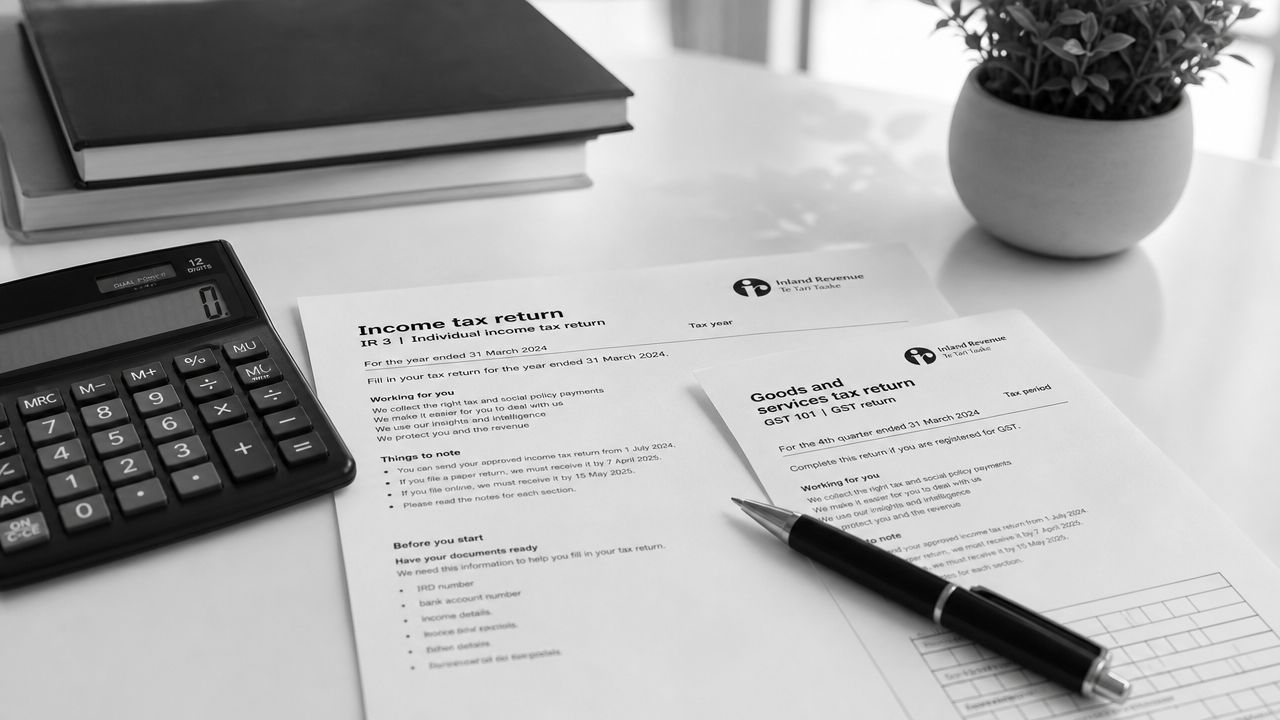
Many business owners get tripped up because Income tax and GST don’t work on the same test.
Under IRD’s public ruling, for income tax a debt must be written off as bad in the same income year, while GST relief can follow different timing and record-keeping requirements, such as a debt being overdue for 12 months (IRD public ruling on writing off debts as bad).
Income tax treatment
For an income tax deduction, the debt must have been previously returned as assessable income. It also needs to be bad and still exist when you write it off. A doubtful debt isn’t enough.
That means you need a real write-off decision, backed by records. If the debt has already been waived, forgiven, extinguished, or sold, the deduction analysis changes.
GST treatment
If you’re GST-registered on the invoice basis, there may also be a GST adjustment when the debt is written off. That’s separate from the income tax deduction. It’s the part many basic articles blur together.
The practical risk is timing. Owners often assume one accounting entry fixes everything. It doesn’t. Your tax deduction follows one rule set. Your GST treatment may follow another. If you want a broader operational view of effective bad debt management, that wider discipline matters just as much as the tax entry itself.
The trap to avoid
- Assuming overdue means deductible: It doesn’t.
- Assuming GST and income tax happen together: They might not.
- Assuming year-end paperwork can wait: It can’t if you want the deduction in the current year.
- Assuming every unpaid invoice qualifies: It won’t, especially if the income was never returned.
For businesses that already struggle with GST coding and return timing, this article on common GST compliance mistakes in NZ is worth reading before you process bad debt adjustments.
The Practical Steps for Writing Off a Debt
Once you’ve decided the debt is dead commercially, the job becomes documentation and clean processing.
In New Zealand, a debt must be written off in the accounts during the income year to qualify for an income tax deduction. This creates a clear compliance milestone: by 31 March for standard-year taxpayers, the accounting entry has to be completed (Reckon’s NZ bad debt write-off guide).
What evidence to keep
Keep a file that shows the debt was real, chased, and no longer recoverable. That usually includes:
- Original invoices: Issued correctly and linked to the customer account.
- Collection records: Email reminders, phone notes, statements, and final demands.
- Customer correspondence: Messages showing inability to pay, refusal to engage, or requests that went nowhere.
- External proof where relevant: Liquidation or insolvency records, including Companies Register checks.
A short internal memo also helps. It doesn’t need legal language. It just needs to say what happened, what recovery steps were taken, and why the debt was written off.
A tidy memo and a clean audit trail usually matter more than fancy wording.
How to record it
The accounting goal is straightforward. Remove the receivable and post the loss to a bad debts expense account.
In Xero, many businesses do this by raising a credit note against the unpaid invoice and coding it to Bad Debts. That keeps the customer ledger tidy and pushes the cost through the Profit & Loss report. If you want to tighten up the mechanics, these Xero tips for small business are a useful refresher.
If the balance is large or the facts are messy, it may be worth one final external step before writing off. In that situation, choosing to choose the right debt collection partner can make sense, especially where you want one last commercial recovery attempt without burning internal time.
What works and what doesn’t
| Approach | Usually works | Usually doesn’t |
|---|---|---|
| Chasing debt | Prompt follow-up, written records, clear deadlines | Repeated vague promises with no action |
| Evidence | Invoices, emails, demand letters, insolvency proof | Verbal recollections only |
| Accounting | Actual write-off entry in Xero or your ledger | Leaving it sitting in receivables and calling it “bad” |
| Tax position | Matching the tax treatment to the facts | Assuming every unpaid balance is deductible |
Worked Example for a Small Business
A typical Auckland example is a wholesaler with an unpaid $18k customer balance. The invoices were issued properly, reminders and final demands were sent, email correspondence showed the customer couldn’t pay, and a Companies Register check confirmed liquidation. The balance was then written off through Xero and supported by a short bad debt memo.
The exact tax and GST split depends on the invoice detail and how it was recorded, so don’t guess the breakdown if you’re unsure. The safer approach is to map the accounting effect clearly and then check the GST component from the original tax invoice.
Bad Debt Write-Off Example ($18,400 Invoice)
| Item | Amount | Accounting Impact |
|---|---|---|
| Customer invoice outstanding | $18,400 | Sits in Accounts Receivable until write-off |
| Write-off entry | $18,400 | Removes the receivable from the balance sheet |
| Bad debts expense | $18,400 less any GST adjustment claimed separately | Hits the Profit & Loss as the commercial loss |
| GST component | Based on the original tax invoice | May be adjusted separately if the GST rules are met |
The point of the example isn’t the mechanics alone. It’s the sequence. First prove the debt is bad. Then write it off properly. Then deal with GST based on the original invoice and your filing basis.
Your Bad Debt Questions Answered

What if I’m a landlord or I use cash-basis accounting
A common pitfall for many arises here. If income is recorded on a cash basis, writing off bad debts has no tax implication because the income was never returned (MYOB’s guidance on bad debt).
So if you never recognised the income for tax in the first place, there usually isn’t a bad debt deduction to claim later. That often affects landlords, contractors, and smaller operators using simpler methods.
Can I still chase a debt after writing it off
Yes. A write-off is an accounting decision about present recoverability. It doesn’t necessarily mean the legal debt vanishes.
I’ve seen clients keep a light-touch approach after write-off and recover part of the balance later through a practical settlement. The best results usually come when the owner stays calm, keeps it professional, and makes it easy for the debtor to agree to a lump-sum payment.
Writing off a debt doesn’t always mean giving up forever. It means being realistic about its value today.
What happens if the customer pays later
That’s a good problem. You record the money received and recognise it as recovered bad debt income in your accounts.
If you previously adjusted GST on the write-off, you also need to deal with the GST effect of that later recovery in the relevant return. This is one reason I tell clients to keep the original bad debt file even after the year-end work is done.
If bad debts are cluttering your books, chewing up your time, or leaving you unsure what IRD expects, Business Like NZ Ltd can help. They’re affordable, down-to-earth Chartered Accountants supporting Auckland businesses and property investors who want more financial freedom, more time away from admin, and less stress. If you want practical advice without the jargon, they’re well worth a conversation.