
NZ Rent Income Tax: Deductions & Profit Guide
The first rent payment usually feels great. Then the second thought hits. What do I owe IRD, what can I claim, and how do I avoid getting this wrong when it comes to rent income tax?
That uncertainty is common, especially for first-time landlords who are already juggling mortgage costs, rates, insurance, and tenant issues. Add recent rule changes around interest deductibility and the bright-line test, and rent income tax can feel harder than it should.
It doesn’t have to be. Once you separate income, deductions, and filing, the job becomes much more manageable. If you want property-specific help, it’s worth looking at rental property accountants in Auckland who deal with these issues every day.
Your Guide to NZ Rental Income Tax
A lot of new landlords assume tax is based on the rent landing in the bank account each week. It isn’t. Tax is based on your rental profit, and that’s a very different number.
That matters because cash coming in and taxable profit aren’t the same thing. You might collect rent, but still have rates, insurance, management fees, repairs, and interest affecting what’s left. On the flip side, some costs you expected to claim may not be fully deductible in the way you thought.
Practical rule: Treat your rental like a small business from day one. Keep every invoice, separate the property spending from personal spending, and don’t wait until year-end to work out whether you made a profit.
For most landlords, key pressure points are simple. What counts as income, what expenses are claimable, and when tax has to be paid. Get those three right, and rent income tax becomes far less stressful.
What Counts as Taxable Rental Income
Your tenant pays the weekly rent on Friday, then a few days later you keep part of the bond for missed rent and get an insurance payment for lost rent after a claim. From a tax point of view, all three receipts need attention.
Rental income is broader than many first-time landlords expect. Inland Revenue is interested in money you receive because you own and rent out the property, not just the regular rent showing in your bank feed. That distinction matters more in 2026 because with interest deductibility and bright-line changes getting so much attention, landlords can miss the basic income side and end up understating what should have been returned.
Payments landlords often miss
- Regular rent received. This includes the normal tenant payments for the right to occupy the property.
- Bond money you keep for unpaid rent. If you retain part of the bond to cover rent arrears, that amount is usually income.
- Insurance payouts for loss of rent. A payment replacing rent is generally treated the same way as rent.
- Tenant reimbursements. If a tenant pays you back for costs connected to the tenancy, check whether that amount should be included as rental income.
Inland Revenue’s guidance on types of rental income sets out the main categories landlords need to return. There is no general rule that small amounts of rental income are tax-free. If the income is taxable, it needs to be declared, even if the property only earned a modest amount during the year.
The practical issue is classification. A payment can feel like a reimbursement or a one-off tidy-up amount, but if it relates to the tenancy, it may still belong in your rental income records. I usually tell landlords to code every incoming property-related payment as soon as it lands, then match it back to their tenancy ledger and bank account each month. If you want a clearer way to organise those figures, a simple profit and loss statement for rental property records helps.
Short-stay and mixed-use properties need extra care because the income stream is often less tidy than a standard weekly tenancy and GST issues may arise.
Read more: Marketplace rules for listed short stay accommodation (Air BnB and similar platforms).
How to Calculate Your Taxable Rental Profit
Your rent hits the account each week, the mortgage goes out, and the property still feels expensive to hold. Then tax time arrives and the number Inland Revenue cares about is not your bank balance. It is your taxable rental profit.
Gross rental income minus allowable expenses equals taxable rental profit or loss.

Start with a tax profit calculation
Tax profit and cash flow are related, but they are not the same thing. A rental can be draining cash each month and still produce taxable income. The reverse can happen too, especially if timing affects when expenses are paid or claimed.
Use a simple working table:
| Item | What to include |
|---|---|
| Income | Rent and other taxable property-related receipts |
| Less expenses | Allowable costs linked to earning that income |
| Result | Profit if income is higher, loss if expenses are higher |
A lot of landlords stay on top of this by keeping a monthly rental property profit and loss statement, rather than trying to rebuild the year from bank statements in March.
Your rental profit is added to your other income
In New Zealand, rental profit does not get taxed separately. It is added to your other taxable income for the year, such as wages, salary, or business income, and taxed at your marginal rate. Inland Revenue sets out the current individual tax rates on its income tax rates and thresholds.
That matters in practice. If your salary already puts you in a higher bracket, any taxable rental profit can be taxed at that higher rate as well. I see this catch first-time investors regularly. The property looks only mildly profitable on paper, but the tax bill is larger than they expected because it sits on top of their PAYE income.
Losses need careful handling
If your rental deductions are more than your rental income, do not assume you will get that tax benefit back straight away through your salary. Residential rental losses are often ring-fenced. Inland Revenue explains the rule in its guidance on residential property ring-fencing.
In plain terms, the loss is usually carried forward to offset future residential rental income or taxable income from selling that property, if the rules allow. That is one of the big cash flow traps for landlords.
Claiming Deductions and Interest Rules
Claiming the right deductions is where good records pay off. It’s also where landlords blur the line between a true expense and a capital improvement.
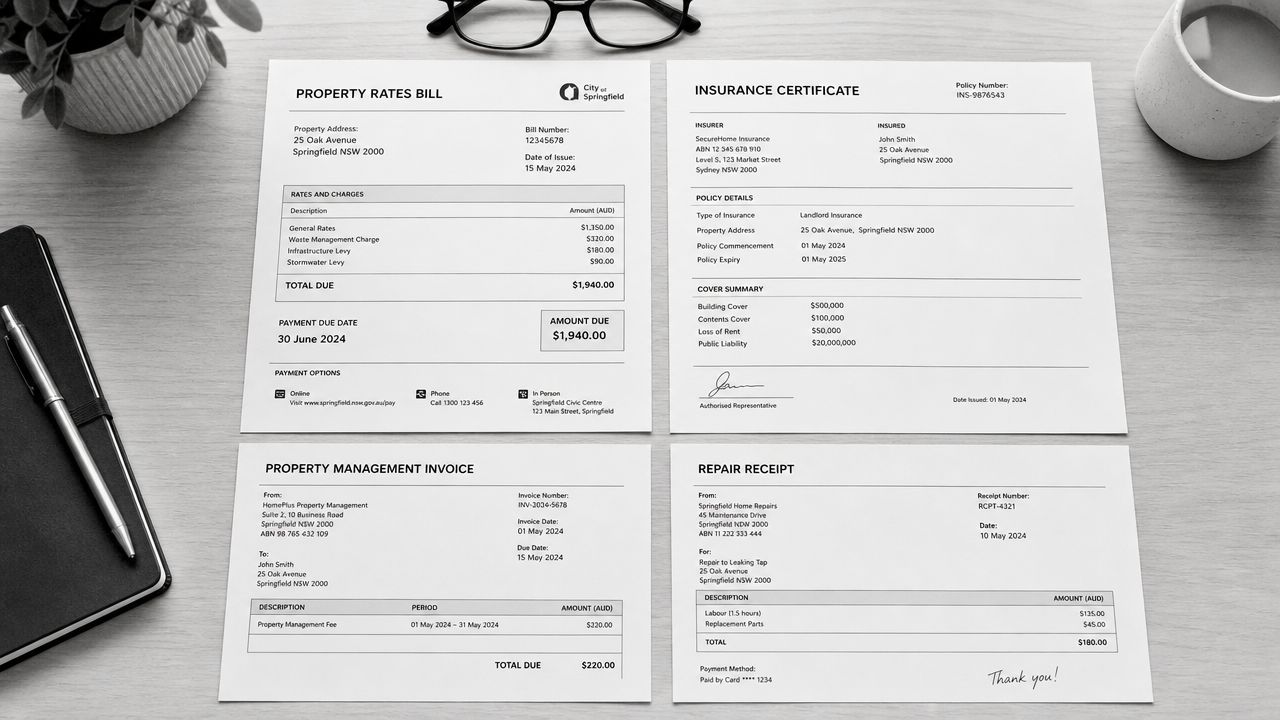
Common deductions landlords look at
These are the categories most owners deal with regularly:
- Rates and insurance. Ordinary holding costs are commonly part of the rental expense picture.
- Property management fees. If you pay an agent to manage tenants, collect rent, or handle inspections, keep those invoices.
- Repairs and maintenance. Fixing wear and tear is different from improving or upgrading the property.
- Accounting fees. Costs linked to preparing rental accounts and returns can be relevant.
- Interest on borrowing. This has been the big moving part in recent years.
If you want a practical NZ-specific checklist, this article on rental property expenses that may be tax deductible is a useful starting point.
Repairs versus improvements
A repair generally restores something to its previous condition. An improvement usually gives you something new, better, or longer-lasting. That difference matters because landlords often assume all property spend is deductible straight away, and that’s where mistakes start.
For example, replacing a few damaged boards after a leak usually sits in a different category from a full upgrade that modernises a whole area. When the invoice includes both repair work and upgrade work, split the costs clearly.
Watch closely: The bigger and more bundled the invoice, the more important the description becomes. “Bathroom works” tells you very little. A detailed breakdown can save a lot of pain later.
Interest deductibility in 2026
The key change for landlords now is this. From 1 April 2025, IRD allows 100% of qualifying residential rental interest to be deductible from rental income, reversing the earlier phase-out restrictions, provided ordinary deductibility rules are met.
That’s good news for cash flow planning in the current period. But don’t assume every interest cost is automatically claimable. You still need to look at the loan purpose, the property type, and whether the borrowing is linked to the rental activity.
Filing Requirements and Keeping Good Records
Once the numbers are right, the next job is compliance. Most individual landlords report rental income through an IR3 tax return.

What good compliance looks like
- File the rental activity with your annual return. Don’t rely on rough estimates pulled together at the last minute.
- Track income and expenses as you go. Monthly coding is easier than rebuilding a year of transactions.
- Keep documents that match the entries. Bank lines alone usually aren’t enough if IRD asks questions.
Landlords must keep records of income and expenses for 7 years. If you can’t support a claim, the fact that you paid it won’t always save it.
Provisional tax and practical systems
If your tax bill grows, provisional tax may apply. In plain terms, it spreads income tax payments through the year instead of leaving one larger payment at year-end. That can help, but only if you’ve planned for it. If you ignore it, cash flow gets squeezed fast.
Xero makes this easier because you can feed rent in, code expenses as they happen, and keep source documents attached to transactions. That saves time and reduces the year-end scramble.
Commercial property can also raise GST issues. Residential rent generally sits outside that, but commercial leases are a different discussion and should be checked separately.
Common Questions and When to Get Help
Is a repair the same as an improvement
No. A repair usually restores. An improvement upgrades. If the work makes the property better rather than just fixing it, don’t assume it belongs in the same bucket as maintenance.
Do I pay tax if I rent out a room
It depends on the facts and how the arrangement is structured. It may be boarding income depending on the facts. Once money is being received in connection with accommodation, don’t guess. Get the setup reviewed early so you know what needs to be declared and what records to keep.
How does the bright-line test affect me
The bright-line test is about selling residential property, not the yearly rental profit. Gains on residential property sold within 2 years for properties acquired on or after 1 July 2024 can be taxed, regardless of whether the property was rented. There is a main home exclusion.
What’s the most common mistake new landlords make
Mixing personal and rental spending, then trying to rebuild the story later. The second is assuming the property accountant can fix poor records after the event without extra time, cost, or risk.
Get help early if you’ve bought recently, refinanced, sold a property, changed ownership structure, or you’re not sure whether a cost is a repair or an improvement.
If your portfolio is growing or your situation has a few moving parts, good advice usually costs less than cleaning up mistakes.
Business Like NZ Ltd helps Auckland property investors with practical, affordable, down-to-earth accounting support. If you want clearer rent income tax numbers, less stress with IRD compliance, more time away from admin, and better progress toward financial freedom, our team can help you get organised and stay that way.