
What is Working Capital Management? Essential Guide
October 25, 2025
What Is a Chart of Accounts? Complete Guide for Your Business
October 29, 2025
9 Proven Ways to Improve Workplace Efficiency
In Auckland’s competitive business landscape, efficiency isn’t just a buzzword; it’s the engine that drives growth and paves the path to financial freedom. For small business owners, juggling countless tasks is the daily norm, but what if you could achieve more with less stress and reclaim your time? The solution lies in working smarter, not just harder. Forget the vague theories and generic advice. This guide cuts straight to the point, offering nine powerful, actionable strategies designed to help you improve workplace efficiency right now.
We’re diving deep into practical methods tailored for the ambitious Auckland business. You’ll learn how to implement proven techniques like the Pomodoro Technique for laser-focused work sessions and comprehensive systems like Getting Things Done (GTD) to finally clear your mental clutter. We will also explore how to leverage Agile methodologies, strategic automation, and even workspace ergonomics to boost productivity. Each strategy is broken down into simple, manageable steps, giving you the tools to transform your daily grind into a well-oiled machine. It’s time to build the business and financial future you envision, one efficient step at a time.
1. Pomodoro Technique
Ever feel like your day is a constant battle against distractions? The Pomodoro Technique is a simple yet powerful time management method that can drastically improve workplace efficiency by forcing you to focus. Created by Francesco Cirillo, it breaks down work into intense, 25-minute intervals, separated by short 5-minute breaks. It’s less about working more hours and more about making the hours you work count.

This method helps you resist the urge to multitask and provides regular breaks to recharge, preventing the mental fatigue that plagues so many Kiwi business owners. After four “Pomodoros,” you take a longer, more restorative break of 15-30 minutes.
How to Implement It
Getting started is easy. All you need is a timer and a to-do list.
- Choose a task from your list.
- Set your timer for 25 minutes. A physical timer is often better than your phone to avoid app-based distractions.
- Work exclusively on that task until the timer rings. If a distraction pops up, jot it down and get back to your task.
- Take a 5-minute break when the timer goes off. Step away from your desk, stretch, or grab a glass of water.
- Repeat. After four Pomodoros, take a longer 15-30 minute break.
For Auckland businesses managing multiple client projects, this technique can be a game-changer. Imagine a graphic designer dedicating one Pomodoro to a client logo, another to a brochure layout, and another to admin-all with focused intensity. This structured approach ensures every project gets the dedicated attention it deserves, boosting both quality and output.
2. Getting Things Done (GTD)
Do you ever feel like you’re drowning in a sea of to-dos, appointments, and brilliant ideas? The Getting Things Done (GTD) method is a complete system for managing it all. Developed by productivity consultant David Allen, GTD is designed to get tasks out of your head and into a trusted external system. This frees up your mental energy, allowing you to improve workplace efficiency by focusing on executing tasks rather than trying to remember them.
The core principle is that your brain is for having ideas, not holding them. By capturing everything, you can achieve a state of “mind like water,” where you respond to things appropriately instead of being overwhelmed. This clarity is essential for any Auckland business owner juggling staff, suppliers, and customer demands.
How to Implement It
Implementing GTD is a commitment, but you can start small. The system revolves around five key steps.
- Capture: Collect everything that has your attention into an “inbox.” This can be a physical tray, a digital app like Todoist, or a simple notebook.
- Clarify: Process each item in your inbox. Ask yourself, “Is it actionable?” If not, trash it, file it for reference, or put it on a “someday/maybe” list.
- Organize: If it’s actionable, decide the very next physical action. If it takes less than two minutes, do it immediately. If it takes longer, delegate it or defer it by putting it on a “Next Actions” list or your calendar.
- Reflect: Review your lists frequently. A weekly review is non-negotiable in GTD to keep your system current and trustworthy.
- Engage: Get to work with confidence, knowing you’re working on the right things at the right time.
For a consultant in Auckland managing multiple client projects, GTD provides a bulletproof framework. It ensures no email is missed and every client deliverable has a clear “next action” assigned, dramatically boosting reliability and project flow.
3. Lean Methodology
What if you could deliver more value to your customers with less effort, time, and resources? That’s the core promise of the Lean Methodology. Born from Toyota’s manufacturing system, this approach is all about systematically eliminating waste to improve workplace efficiency. It’s not about cutting corners; it’s about refining your processes to be smarter, faster, and more focused on what the customer truly values.
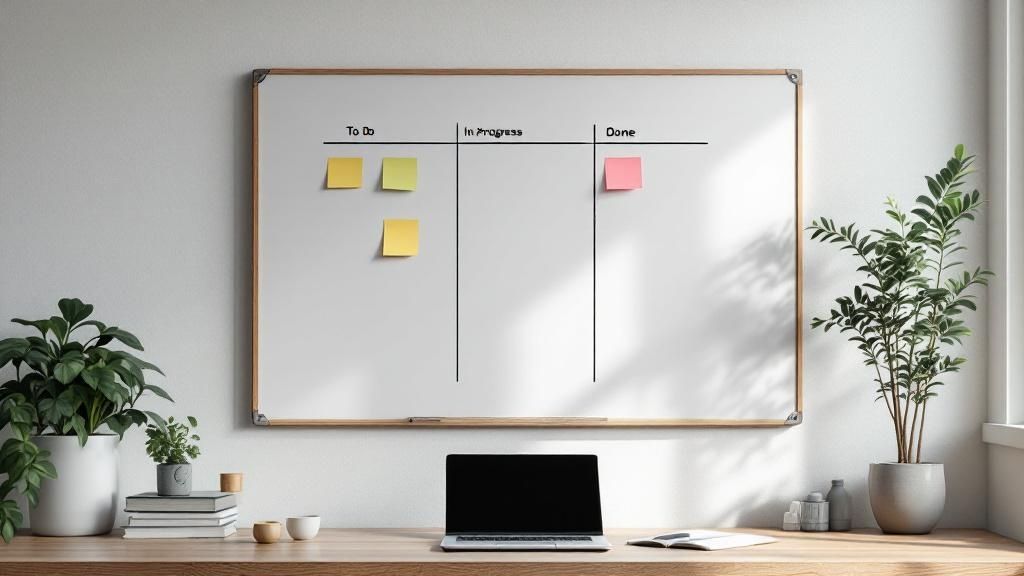
This methodology identifies and targets “waste” in all its forms, from unnecessary process steps and excess inventory to waiting times and defects. By adopting a mindset of continuous improvement (Kaizen), your business can become more agile and responsive, which is a massive advantage in Auckland’s competitive market.
How to Implement It
You don’t need to be a manufacturing giant to benefit from Lean. Here’s how to get started:
- Identify Value: First, define what value means from your customer’s perspective. What are they actually willing to pay for?
- Map the Value Stream: Chart every single step in your current process, from start to finish. This will visually reveal where waste is happening.
- Create Flow: Eliminate the wasteful steps you identified. The goal is to make the process flow smoothly without interruptions, bottlenecks, or delays.
- Establish a Pull System: Instead of pushing work through, only start new work when there is demand from the next step in the process. This prevents overproduction.
- Seek Perfection: Lean is a continuous journey. Regularly review your processes and empower your team to suggest and make incremental improvements.
For a local trades business, this could mean streamlining how they schedule jobs to reduce travel time between sites. Extending efficiency beyond internal operations, tools like a Supply Chain Efficiency Cost Saver can help businesses optimize their entire logistics network, aligning with Lean principles. This structured approach ensures you’re constantly maximizing value and minimizing waste.
4. Automation and Technology Integration
Are your days consumed by repetitive, mind-numbing tasks? Automation and technology integration is the strategic use of software to handle these routine jobs, streamlining workflows and slashing human error. This approach can seriously improve workplace efficiency, freeing your team to focus on high-value, creative work that actually grows your business. It’s about working smarter, not harder, by letting technology do the heavy lifting.
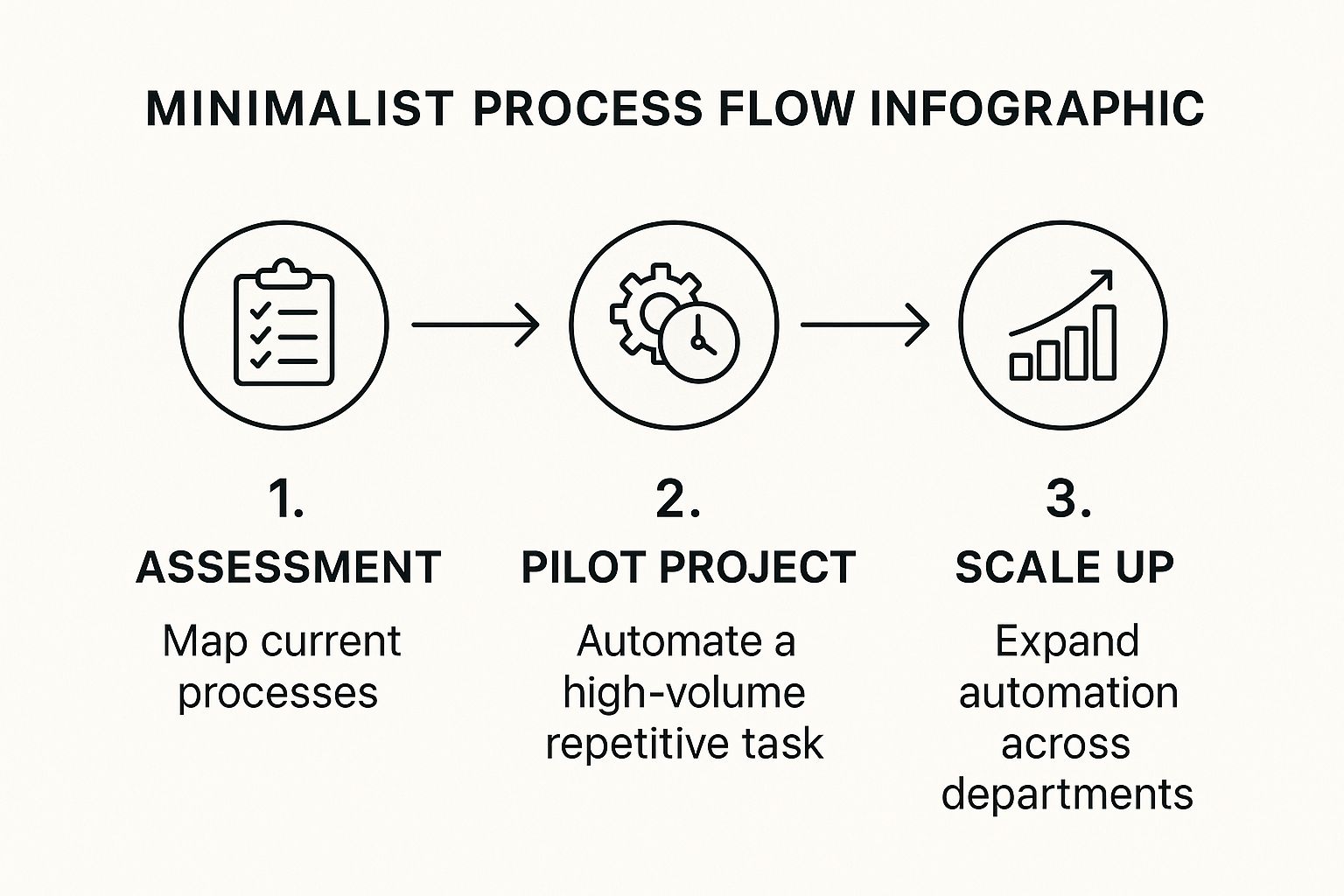
This process flow visualizes a simple, effective way to introduce automation into your business without overwhelming your team. By starting small with a pilot project, you can demonstrate value and build momentum before expanding automation efforts across the company. A cornerstone of modern workplace efficiency involves leveraging these tools to automate repetitive tasks and reclaim valuable time.
How to Implement It
You don’t need to be a tech giant to start automating. The key is to begin with small, impactful changes.
- Identify Repetitive Tasks: Start by mapping out your current processes. Look for high-volume, low-complexity tasks like data entry, scheduling, or sending reminder emails.
- Choose the Right Tools: Use platforms like Zapier or Microsoft Power Automate to connect apps you already use. For example, you can automatically create a task in your project management tool whenever a new client signs a contract.
- Start with a Pilot Project: Select one well-defined process to automate first. This creates a quick win and helps you learn without disrupting major operations.
- Train Your Team: Ensure your staff understands how the new automated systems work and, more importantly, how it benefits them by reducing tedious work.
- Monitor and Optimize: Regularly review your automated workflows. Are they saving time? Are there any errors? Continuously refine the process for better results.
For a small Auckland e-commerce business, this could mean automating order confirmations, creating shipping labels, and updating inventory levels simultaneously. This not only saves countless hours but also reduces costly mistakes, leading to happier customers and a healthier bottom line.
5. Agile Work Methodologies
Is your business struggling to keep up with rapidly changing market demands? Agile work methodologies offer a flexible, iterative approach that can dramatically improve workplace efficiency by prioritizing collaboration and rapid adaptation. Originally from the software world, Agile principles are now being used by all sorts of Kiwi businesses to deliver better results, faster. It’s about breaking large projects into smaller, manageable cycles called “sprints.”
This approach encourages constant feedback and adjustment, ensuring the final product truly meets customer needs. Instead of a single, high-stakes launch at the end of a long project, Agile delivers value incrementally, allowing teams to learn and pivot along the way. This reduces risk and keeps everyone focused on what matters most.
How to Implement It
Adopting Agile is more about a mindset shift than a rigid process, but frameworks like Scrum can provide a clear starting point.
- Form a cross-functional team with all the skills needed to complete a project.
- Create a product backlog, which is a prioritized list of all the features and tasks required.
- Plan a “sprint”, a short, time-boxed period (usually 1-4 weeks) where the team commits to completing a small set of items from the backlog.
- Hold daily stand-up meetings (15 minutes max) to discuss progress, roadblocks, and plans for the day.
- Review and retrospect. At the end of each sprint, review the work completed and discuss how to improve the process for the next one.
For an Auckland-based marketing agency, this could mean running a two-week sprint to launch a new client’s social media campaign. The team would work together on content creation, ad setup, and analytics, adjusting their strategy based on real-time performance data instead of waiting months for a campaign report. This responsiveness is key to staying ahead.
6. Strategic Communication Plans
Are crossed wires, endless email chains, and missed updates draining your team’s productivity? A Strategic Communication Plan organizes how information flows through your business, ensuring messages are clear, timely, and effective. This approach goes beyond just using tools; it’s about creating a system that improves workplace efficiency by matching the right message to the right channel.
This method eliminates confusion and reduces the time wasted searching for information or clarifying misunderstandings. Think of it as a playbook for all workplace conversations, from urgent project updates to company-wide announcements. For Auckland businesses juggling multiple clients and team members, a clear plan prevents important details from falling through the cracks.
How to Implement It
Building a robust communication plan involves defining protocols and choosing the right tools for the job.
- Audit your current communication. Identify what’s working and what’s causing bottlenecks. Are urgent messages getting lost in email? Are meetings unproductive?
- Define channels for specific purposes. For example, use Slack or Microsoft Teams for quick, informal questions, email for formal client communication, and a project management tool like Asana for task-specific updates.
- Create clear guidelines. Document when and how each channel should be used. This could include response time expectations and protocols for escalating issues. An effective plan also helps when disagreements arise. To explore this further, you can check out some tips on how to communicate effectively when there’s a disagreement.
- Establish meeting protocols. Create agendas, define objectives for every meeting, and send out summary notes with clear action items afterwards.
- Train your team. Ensure everyone understands the plan and knows how to use the designated tools effectively.
A small digital marketing agency in Auckland could implement this by using a dedicated Slack channel for each client, reserving email for official reports, and holding a brief daily stand-up meeting to align on priorities. This structured approach ensures everyone is on the same page, freeing up more time for creative and strategic work.
7. Workspace Optimization and Ergonomics
Is your workspace actively working against you? An uncomfortable or poorly arranged environment can be a major drain on productivity. Workspace optimization and ergonomics focus on designing your physical surroundings to support comfort, well-being, and peak performance, which can significantly improve workplace efficiency. This isn’t just about comfy chairs; it’s a science-backed approach to creating a space where focus comes naturally.

From the height of a monitor to the quality of lighting, every element of your office contributes to or detracts from your team’s output. A well-designed workspace reduces physical strain, minimises distractions, and can even boost morale. For a deeper dive into how proper seating can transform your workspace, explore the many documented benefits of ergonomic office furniture.
How to Implement It
You don’t need a massive budget to make meaningful ergonomic improvements. Small adjustments can yield big results.
- Conduct Ergonomic Assessments: Check each workstation. Is the monitor at eye level? Are wrists straight when typing? Is the chair providing proper back support?
- Offer Adjustable Options: Provide adjustable chairs, desks (standing desks are great), and monitor stands to accommodate different body types and preferences.
- Manage the Environment: Control noise with quiet zones or noise-cancelling headphones. Ensure adequate lighting to prevent eye strain and headaches.
- Encourage Movement: Promote the 20-20-20 rule (every 20 minutes, look at something 20 feet away for 20 seconds). Encourage short breaks to stretch and walk around.
- Gather Feedback: Regularly ask your team what could make their workspace more comfortable and productive.
For a growing Auckland-based consultancy, creating a mix of quiet pods for deep work, collaborative tables for brainstorming, and comfortable, ergonomic desks for daily tasks can cater to every need. This variety empowers employees to choose the environment that best suits their immediate task, directly boosting focus and efficiency.
8. Data-Driven Decision Making
Are you making critical business decisions based on gut feelings or old habits? Leveraging data is one of the most powerful ways to improve workplace efficiency, taking the guesswork out of your strategy and operations. Data-driven decision making is about using hard facts and analysis to guide your choices, from marketing campaigns to inventory management, ensuring your efforts are targeted and effective.
This approach transforms your business from reactive to proactive. Instead of wondering why a product isn’t selling, you can analyze customer data to understand exactly what they want. Popularized by tech giants like Google and Amazon, and made accessible through tools like Tableau and Microsoft Power BI, this methodology is no longer just for large corporations.
How to Implement It
You don’t need a team of data scientists to get started. The key is to begin with clear objectives.
- Ask the right questions. Start with a specific business problem you want to solve. For example, “Which of our marketing channels delivers the highest return on investment?”
- Collect relevant data. Gather information from sources like your website analytics, sales records, customer surveys, or social media insights.
- Analyze and visualize. Use tools, even simple ones like Google Sheets, to spot trends, patterns, and outliers. Visual charts and graphs make insights easier for everyone to understand.
- Act on your findings. Use the insights to make informed changes to your processes, strategies, or product offerings.
- Review and repeat. Set up regular reporting cycles to continuously monitor performance and refine your approach.
For an Auckland-based retailer, this could mean using sales data to optimize stock levels for seasonal demand, preventing overstocking and lost sales. By analysing foot traffic data, they could adjust staffing schedules to match peak customer hours, directly cutting costs and improving service. This focus on concrete data ensures every decision pushes your business toward greater efficiency and profitability.
9. Employee Wellness and Work-Life Balance
Thinking that a burnt-out team is a productive team is a fast track to failure. Prioritising employee wellness and work-life balance isn’t just a “nice-to-have” perk; it’s a core strategy to improve workplace efficiency. This approach recognises that employees who are physically, mentally, and emotionally healthy are more focused, creative, and engaged, directly boosting your bottom line.
Pioneered by leaders like Arianna Huffington of Thrive Global, this movement shows that fostering a supportive environment prevents costly burnout and high staff turnover. It’s about creating policies and a culture where healthy boundaries are respected, and well-being is seen as a key performance indicator.
How to Implement It
You don’t need a huge budget to make a meaningful impact. Start by listening to your team and leading by example.
- Survey your team: Don’t guess what they need. Use anonymous surveys to ask what wellness initiatives they’d value, whether it’s flexible hours, mental health support, or fitness subsidies.
- Lead by example: If managers are sending emails at 10 PM, staff will feel pressured to do the same. Leadership must model healthy work-life boundaries by taking breaks and logging off on time.
- Offer a variety of options: Wellness isn’t one-size-fits-all. Provide a mix of resources, such as access to mental health apps like Headspace for Work, sponsoring a local sports team, or offering flexible start times.
- Create clear policies: Implement policies that protect personal time, like a “right to disconnect” policy outside of work hours.
- Measure and share success: Track metrics like staff turnover and sick days. Share positive feedback and results to show the team that their well-being is a genuine company priority.
For a growing Auckland tech startup, this could mean providing standing desks, offering one “mental health day” per quarter, and ensuring no meetings are scheduled over lunchtime. These small, intentional actions create a culture where people feel valued and empowered to do their best work, significantly enhancing overall productivity.
Workplace Efficiency Strategies Comparison
| Item | Implementation Complexity 🔄 | Resource Requirements ⚡ | Expected Outcomes 📊 | Ideal Use Cases 💡 | Key Advantages ⭐ |
|---|---|---|---|---|---|
| Pomodoro Technique | Low: simple timer-based, easy to start | Minimal: physical timer or basic apps | Improved focus, reduced mental fatigue | Individual focus sessions, time management | Easy to implement, prevents procrastination |
| Getting Things Done (GTD) | High: multi-step system, requires discipline | Moderate: trusted tools and weekly reviews | Reduced mental load, organized task execution | Complex personal or organizational task management | Scalable, clear action steps, increases follow-through |
| Lean Methodology | High: cultural change, long-term commitment | High: training, process mapping tools | Waste reduction, improved quality and engagement | Manufacturing, service optimization, scalable | Systematic problem-solving, cost reduction |
| Automation and Technology Integration | Very High: technical expertise and maintenance | High: software, technical skills | Elimination of repetitive tasks, consistent output | Large scale workflows, repetitive tasks | 24/7 operation, scalability, error reduction |
| Agile Work Methodologies | Moderate to High: requires cultural change | Moderate: training, facilitation tools | Increased adaptability, faster value delivery | Software development, cross-functional teams | Improves collaboration, reduces risks |
| Strategic Communication Plans | Moderate: needs team buy-in and maintenance | Moderate: communication platforms | Reduced miscommunication, improved alignment | Teams requiring structured communication flow | Enhances transparency, supports faster decisions |
| Workspace Optimization and Ergonomics | Moderate: upfront investment, ongoing adjustment | High: ergonomic furniture, assessments | Improved comfort, reduced physical strain | Offices, remote workspaces | Boosts focus and retention, reduces health costs |
| Data-Driven Decision Making | Moderate to High: tool setup and data skills | High: analytics tools, data collection | Objective decisions, better predictions | Businesses relying on metrics and forecasting | Removes bias, supports continuous improvement |
| Employee Wellness and Work-Life Balance | Moderate: ongoing investment, cultural change | Moderate to High: wellness programs | Increased engagement, reduced turnover | Organizations focusing on employee well-being | Improves motivation, creativity, reduces absenteeism |
From Strategy to Success: Your Next Steps to Efficiency
We’ve covered a lot of ground, diving deep into nine powerful strategies designed to revolutionise how your Auckland business operates. From the focused sprints of the Pomodoro Technique and the mental clarity of Getting Things Done (GTD) to the waste-cutting principles of Lean, the path to greater productivity is paved with actionable systems, not just wishful thinking.
The key takeaway? There’s no single magic bullet. The goal isn’t to implement all nine of these methods at once. Instead, the real power lies in selectively choosing the right tools for your specific challenges. Maybe your team is struggling with project visibility; Agile could be your answer. Or perhaps individual burnout is creeping in; a renewed focus on employee wellness and workspace ergonomics might be the most impactful change you can make. The journey to improve workplace efficiency is a marathon, not a sprint, built on small, consistent, and strategic adjustments.
Turning Insights into Action
So, where do you go from here? The most common mistake is getting overwhelmed by options and doing nothing. Let’s break down the next steps into a manageable plan to ensure these ideas don’t just stay on the page.
- Start Small: Don’t try to roll out Agile, GTD, and a new data analytics platform all in the same week. Pick just one or two strategies that resonated most with you. Was it the idea of automating repetitive tasks or finally establishing a clear strategic communication plan? Choose the one that seems most achievable and addresses your biggest pain point right now.
- Get Your Team Involved: Efficiency is a team sport. Present the chosen method to your crew, explain the “why” behind it, and ask for their input. When people feel like they are part of the solution, they are far more likely to embrace the change. This is especially crucial for methodologies like Lean or Agile that depend heavily on team collaboration.
- Measure Your Progress: How will you know if your efforts are working? Before you start, define what success looks like. Is it fewer missed deadlines? A reduction in project costs? Higher scores on an employee satisfaction survey? By tracking key metrics, you can demonstrate the real-world value of your efforts and make data-driven decisions on what to do next.
Ultimately, mastering these concepts is about more than just getting more done in less time. It’s about building a resilient, adaptable, and sustainable business. It’s about creating an environment where your team can do their best work without burning out. For small business owners in Auckland, this operational excellence is the most direct route to achieving that coveted financial freedom, transforming your daily grind into a well-oiled machine that drives growth and profitability.
Ready to connect these efficiency gains directly to your bottom line? At Business Like NZ Ltd, we specialise in helping Auckland businesses translate operational improvements into tangible financial results and sustainable growth. Let us be your expert partner in building a more efficient, profitable, and freeing business. Visit Business Like NZ Ltd to learn how we can help you thrive.