
How to Sell a Business NZ Your Guide to a Smart Exit
January 10, 2026
Master Cash Flow Management and Forecasting in NZ
January 15, 2026
How to Hire Your First Employee
Bringing on your first employee is a massive step. It’s not just one task, but a series of crucial moments: figuring out the job itself, getting the legal stuff sorted, finding the right person, and then making them feel welcome. Nail this process, and you’re not just hiring help; you’re setting the stage for your business’s future success and culture.
Your First Hire Is a Major Milestone

Let’s be real: making that first hire is a big deal. It’s a clear sign your Auckland business is on the up, so it’s totally normal to feel both thrilled and a little bit anxious. You’re not just getting another pair of hands—you’re actively building the company you want to be.
This is the moment you go from being a one-person show to a team leader. It’s a shift that comes with new responsibilities but also incredible opportunities. Small businesses are genuinely the backbone of job growth. To put it in perspective, in big economies like the US, businesses with fewer than 250 employees created a staggering 52.8% of all net new jobs between early 2021 and mid-2024. That shows the huge impact we have.
Laying the Groundwork for a Great Hire
Before you even think about writing a job ad, it helps to see the whole picture. Think of this guide as a friendly chat over coffee, walking you through the entire journey without the jargon and stress.
Taking a moment to prepare properly isn’t just about ticking legal boxes. It’s about building a strong foundation. Your first employee will play a huge part in shaping your company culture, so finding the right fit goes way beyond what’s written on their CV.
We’ll cover everything you need to know to confidently bring on your first team member:
- Pinpointing the Role: What do you really need help with? We’ll dig into how to define a role that makes a genuine impact.
- Sorting the Legal & Financials: Getting your head around your obligations in New Zealand, from employment agreements to KiwiSaver.
- Finding & Interviewing Talent: How to attract and spot the best people for your unique business.
- Welcoming Them Aboard: Making sure your new hire feels part of the team and can hit the ground running from day one.
If you want a deeper dive into the whole process from start to finish, this how to recruit employees guide is a fantastic resource. Right then, let’s get into it.
Getting Your Business Ready for a New Hire
Alright, before you jump on SEEK and post that job ad, we need to talk. There’s some crucial groundwork to lay first. This isn’t just about making a to-do list for someone new; it’s about getting your business fundamentally ready to support another person. When you hire your first employee, you’re not just getting an extra pair of hands—you’re setting the entire foundation for your future team.
First things first: you need to get brutally honest about what you actually need. “I need help” is a feeling, not a job description. Dig deeper. Are you so swamped with admin that you can’t focus on landing bigger clients? Are you turning away work because you’ve hit your capacity? Pinpointing the exact pain point is the key to defining a role that makes a real difference.
What Will This Person Actually Do?
A clearly defined role is your best friend in the hiring process. It helps you write a job ad that cuts through the noise and attracts people who are genuinely a good fit. Think beyond just a list of tasks and consider the real impact they’ll have.
I find it helps to break it down like this:
- The Daily Grind: What are the non-negotiable things this person will do every single day? This could be managing the company’s Instagram, packing orders from your online store, or being the friendly voice that answers customer emails.
- The Weekly & Monthly Rhythm: What are the bigger picture goals they’ll own? Maybe that’s pulling together a weekly sales report, managing the monthly stocktake, or creating the customer newsletter.
- The Big Picture Impact: How does this role push your business forward? This is the important part. Perhaps they free you up to finally work on the business instead of just in it. Or maybe their specific skills let you launch that new service you’ve been dreaming about.
This graphic really nails down the core elements you need to think about when you’re crafting that initial job description.
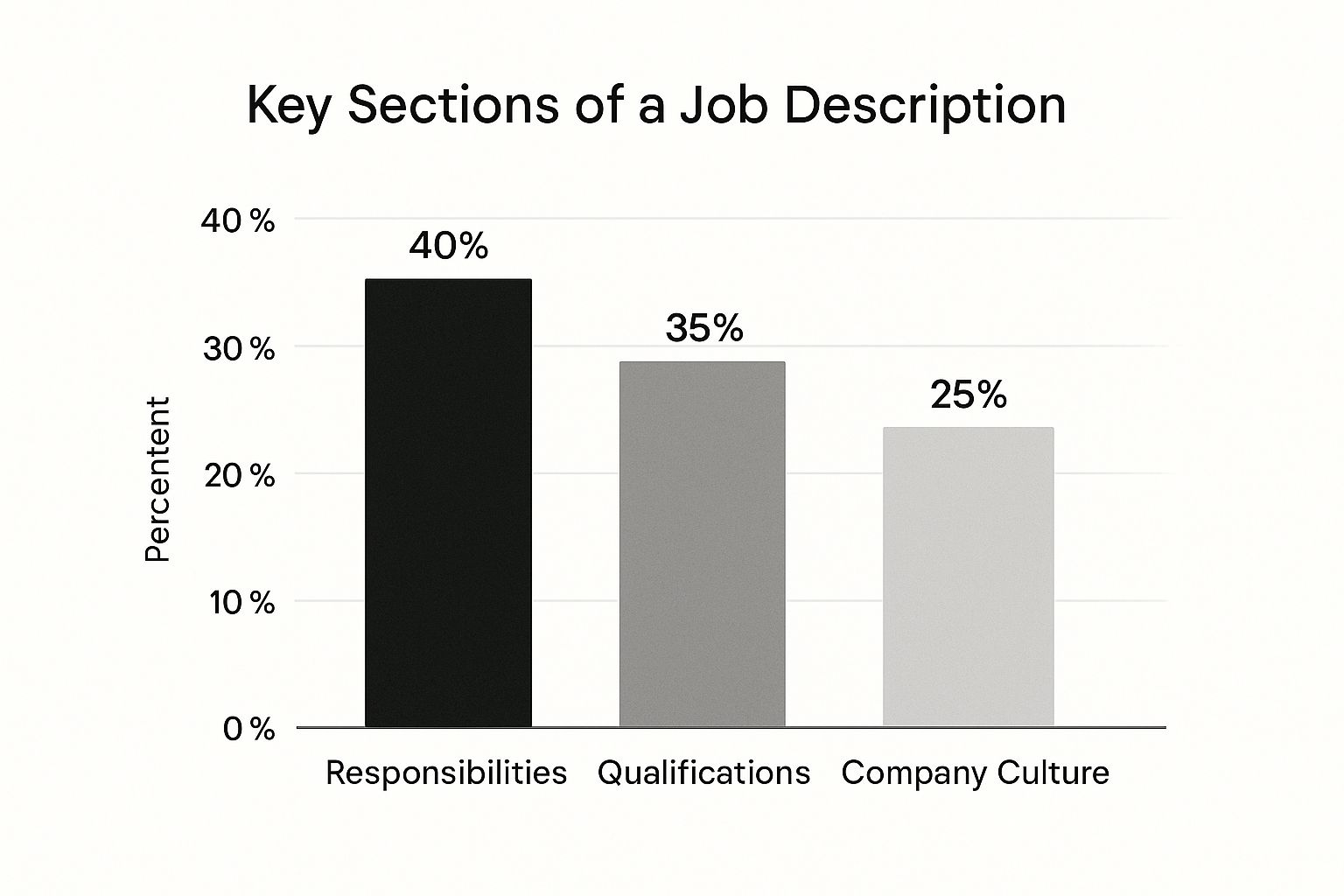
As you can see, spelling out the responsibilities is absolutely critical. But don’t forget about qualifications and culture—that’s how you find someone who sticks around for the long haul.
Understanding the True Cost of an Employee
Now, let’s talk money. Hiring your first employee costs a lot more than just their salary or hourly rate. Getting this budget wrong is a classic mistake that can put a serious strain on your cash flow. You have to be realistic about the total financial commitment.
Your first employee is an investment, not just an expense. Budgeting for their full cost—including salary, KiwiSaver, ACC, training, and equipment—is one of the smartest things you can do to ensure both of you succeed.
For Kiwi small businesses, just the onboarding process—getting them trained and productive—can cost between $600 and $1,800 per new hire. And that’s before you even think about the ongoing costs.
To give you a clearer picture, here’s a rough breakdown of what you should be planning for.
Estimated First Employee Cost Breakdown
| Cost Category | Estimated Cost (NZD) | Frequency |
|---|---|---|
| Recruitment (Job Ads) | $200 – $500 | One-Time |
| Workspace Setup (Desk, Chair) | $500 – $1,500 | One-Time |
| Computer/Laptop | $1,000 – $2,500 | One-Time |
| Software Licenses (per user) | $50 – $200 | Monthly |
| KiwiSaver (Employer Contribution) | 3% of Gross Salary | Ongoing |
| ACC Levies | Varies (approx. 1-2%) | Ongoing |
| Training & Onboarding | $600 – $1,800 | One-Time |
| Payroll Service | $20 – $50 | Monthly |
This is just a sample, of course, but it highlights all those “hidden” expenses that can catch you by surprise. For Auckland businesses specifically, you have to get your head around KiwiSaver contributions and ACC levies from day one. Having a solid financial plan isn’t just good sense; it prevents nasty surprises and creates a stable foundation for your growing team. If you want to dive deeper, you can explore this detailed guide on the costs of hiring.
Writing a Job Ad That Great People Actually Want to Answer

Let’s be real for a moment. A dry, cookie-cutter job ad is basically an open invitation for a flood of generic applications. If you want to find someone genuinely fantastic when you hire your first employee, you need to write an ad that sells the role, not just lists the duties.
Think of it less like a formal notice and more like a personal invitation.
Your mission is to get the right person in Auckland genuinely excited about the idea of joining your small business. This means going way beyond a boring list of tasks and painting a picture of the opportunity. You’re not some huge, faceless corporation, and that’s your secret weapon—so flaunt it!
Sell the “Why,” Not Just the “What”
The best people aren’t just scrolling through job boards looking for a list of things to do. They want to know what it’s really like to work with you. They’re curious about the impact they could have and the vibe of your company. This is your chance to connect with them on a human level before you even meet.
To make your ad pop, hit these key points:
- Your Mission: In a sentence or two, what does your business do and why should anyone care? What gets you out of bed in the morning?
- The Vibe: Describe your work culture. Are you a collaborative, heads-down-and-focused type of place, or more of a creative and chatty team (even if it’s a team of one, for now!)? Let your own personality leak into the writing.
- The Potential for Growth: This person is your first hire! That’s a massive opportunity for them to grow as the business grows. Make sure you mention this. Talk about the potential to learn new skills and take on bigger responsibilities down the track.
Your job ad is your first sales pitch to a potential team member. Don’t just list responsibilities; showcase the experience. Make them feel like they’d be missing out if they didn’t apply.
How to Structure Your Ad for Maximum Impact
Nobody wants to read a wall of text. It’s an instant turn-off. Make your ad scannable and easy to digest by using clear headings and bullet points to break things up.
Try a simple flow like this:
- A Catchy Title: Ditch the boring “Admin Assistant Wanted.” Try something with a bit more personality, like “Organisational Superstar Wanted for Growing Auckland Design Biz.”
- About Us: A short, punchy paragraph about your company. Keep it real.
- The Role: Okay, what will they actually be doing day-to-day? Use bullet points here for the main responsibilities.
- About You: Describe the person you’re looking for. Focus more on attitude, soft skills, and what they can do, rather than just demanding a certain number of years of experience.
- The Perks: Be upfront about the good stuff. Mention the salary range, any flexibility, and other benefits that make the role a great catch.
Finding good people is a genuine struggle for small businesses right now. A recent survey revealed that a staggering 66% of owners find hiring difficult, pointing to fierce competition and a real shortage of skilled applicants. You can read more about these small business hiring challenges.
This just means that crafting a compelling ad is more critical than ever. By making your ad stand out from the crowd, you give yourself the best possible chance of attracting Auckland’s best.
How to Find and Interview Your Top Candidates
Alright, you’ve got a killer job ad out there and the applications are starting to trickle in. Now the real work begins. This is where you switch from broadcasting your needs to actively hunting for the right person to join your team. For any small business in Auckland, knowing where to cast your net is half the battle.
The big players like Seek and Trade Me Jobs are the obvious first stops, and they’ll definitely bring in the numbers. But don’t stop there. I’ve found that some of the best people come from places you wouldn’t expect. Think about niche industry Facebook groups or even your local business association network. These can be absolute goldmines for finding people who are already plugged into your world and passionate about what you do.
Sifting Through CVs Without Losing Your Mind
Let’s be real—as a small business owner, your time is your most valuable asset. You can’t spend days poring over every single CV. The trick is to have a smart, quick system for that first initial cull.
First, make a list of your absolute deal-breakers. These aren’t just about skills; they’re the practical things. If the job requires a driver’s license and the applicant doesn’t have one, they’re out. This first pass should be fast and ruthless.
Next, look for signs that they actually want to work for you. A generic, copy-pasted cover letter is a massive red flag for me. But a candidate who takes a minute to mention your business by name or references a specific point from your ad? That shows effort. It’s a simple thing that instantly separates the serious applicants from those just firing off CVs into the void.
Your goal in the initial screening isn’t to find the perfect employee. It’s to efficiently filter out the applications that are clearly not a fit, so you can focus your energy on the promising ones.
The Interview Is a Conversation, Not an Interrogation
Once you have your shortlist, it’s time to actually talk to people. Remember, an interview is a two-way street. You’re sizing them up, sure, but they’re also deciding if your business is a place they genuinely want to work.
My advice? Ditch the tired, old questions like, “What’s your biggest weakness?” You’ll get much more insightful answers by focusing on how they think and solve problems.
Try questions like these instead:
- Scenario-Based: “Imagine an unhappy customer sends an angry email about their order. What are the first three things you do?”
- Behavioural: “Tell me about a time you had to get up to speed on a new piece of software really quickly. How did you tackle it?”
- Culture Fit: “What kind of work environment helps you do your best work?”
This approach gives you a real glimpse into their working style, not just their pre-rehearsed answers. It helps you picture how they’d actually handle the day-to-day realities of the job. Digging into some comprehensive hiring best practices can give you a fantastic framework for this.
Finally, and this is crucial, you must stay on the right side of New Zealand’s employment laws. Avoid any questions about age, marital status, religion, or ethnicity. To make sure you’re fully compliant, have a look at this quick guide to employment basics. It clearly breaks down what you can and can’t ask.
!You’ve done it. You’ve waded through the CVs, sat through the interviews, and found the one. That perfect person to join you as your very first employee. It’s a massive milestone for any business owner.
Now, let’s make it official. It’s time to shift from a great chat to a solid, legally-sound working relationship.
A quick, enthusiastic phone call is always my first move. It’s personal, it lets you share your excitement, and you can quickly confirm the big-ticket items like salary and a start date. It just sets a really positive tone. But a handshake and a verbal agreement, while nice, aren’t enough. The real foundation is what you put on paper.
Getting the Employment Agreement Right
Here in New Zealand, a written employment agreement isn’t just a “nice-to-have” – it’s the law. You must give your new hire a written contract. They need a proper chance to read it over and get independent advice before they put pen to paper. Honestly, trying to sidestep this is just asking for trouble and can land you in hot water with some hefty penalties.
Think of this agreement as the playbook for your working relationship. It’s there to protect both of you by making sure everyone is crystal clear on how things will work.
If there’s one piece of advice I can give you, it’s this: don’t rush the employment agreement. It’s your best tool for avoiding confusion and setting expectations right from the start. It’s your proof that you’re meeting your legal duties as an employer in New Zealand.
So, what absolutely has to be in this document? To stay on the right side of the law, you’ll need to cover the essentials.
- The names: Your business name and the employee’s full name. Simple.
- The job: Their official title and a clear outline of what they’ll actually be doing day-to-day.
- The hours: The agreed-upon work hours, including start and finish times. Be clear about any expectations for weekend or after-hours work.
- The money: How much they’ll be paid (wage or salary), how often (weekly, fortnightly), and on what day.
- The time off: Details on annual holidays, sick leave, and bereavement leave. Make sure these meet, or exceed, New Zealand’s minimum legal entitlements.
Getting this document sorted is a non-negotiable part of bringing on your first team member. It shows you’re a professional and builds a foundation of fairness from day one.
Sorting the Last Bits of Paperwork
Once the employment agreement is signed, you’re on the home stretch. There are just a couple more official forms to get sorted for the Inland Revenue Department (IRD) before your new hire walks through the door.
You’ll need to get these two forms filled out:
- Tax code declaration (IR330): Your new employee fills this out to tell you which tax code to use. This is crucial for making sure you’re deducting the right amount of PAYE (Pay As You Earn) tax from their wages.
- KiwiSaver deduction form (KS2): If they’re eligible for KiwiSaver, this form is where they tell you if they’re joining and what percentage they want to contribute. Remember, as their employer, you’re also required to contribute a minimum of 3% of their gross pay.
Ticking these boxes properly from the get-go will save you so many headaches later on. It sends a clear message that you’re a serious employer, and it ensures your new team member is correctly set up in our tax and retirement savings systems.
Creating a Welcoming Onboarding Experience
You’ve done the hard yards and found your perfect first hire. Awesome. But the work isn’t over just yet. Now it’s all about making sure they feel welcome, prepared, and genuinely excited to be part of what you’re building.
A great onboarding experience isn’t about expensive gifts or over-the-top gestures. It’s about thoughtful preparation that shows you value them from the minute they walk in the door.
Think about it: a messy, disorganised first day can make a new person feel like an afterthought. That’s a terrible first impression. The first week is absolutely crucial for setting the tone. In fact, solid onboarding programs can boost employee retention by a massive 82%. Your goal is simple: get them comfortable and contributing, fast.
Planning the First Day and Week
Remember what it’s like to be the new person? It’s that weird mix of nerves and excitement. Your job is to dial down the anxiety and crank up the excitement.
This starts before they even arrive.
Get their workspace completely sorted. I mean everything—a clean desk, a computer that’s logged in and working, and all the software they’ll need already installed. Nothing kills the buzz more than having your new hire sit awkwardly in a corner for two hours while you scramble to find a password.
Beyond the physical setup, sketch out a rough plan for their first week. This isn’t a military-style schedule, but a simple outline shows you’ve actually thought about their arrival and you’re ready for them.
A strong start isn’t about drowning someone in paperwork. It’s about connection. Making your new hire feel valued from day one is the fastest way to build trust and turn them from a new employee into a real team member.
Here’s a quick-and-dirty checklist to make their first week a winner:
- A Proper Welcome: Be there to greet them yourself. Give them a tour of the space, introduce them to anyone they’ll be working with, and take them out for a coffee or lunch. Keep day one light on the heavy work.
- The Essentials Kit: Put together a simple welcome pack. This could include logins, a list of key contacts, and a quick rundown of what they’ll be tackling first.
- Daily Check-ins: This is a big one. Schedule a quick, informal 15-minute chat at the end of each day for the first week. It’s the perfect time for them to ask all those “silly” questions they were too nervous to ask earlier.
If your first hire is working remotely, the game changes slightly, but the goal is the same: make them feel connected and prepared. This guide to training remote employees has some fantastic ideas for making sure they’re set up for success from their home office.
Ultimately, a smooth onboarding process shows you’re a professional who values their people. It’s a small investment of your time that pays huge dividends in loyalty and productivity down the line.
Got Questions About Hiring? We’ve Got Answers

Stepping into the world of hiring for the first time? It’s completely normal to have a head full of questions. It’s a huge step for any business owner, and a few uncertainties are part of the process. We get asked about this stuff all the time, so let’s clear up a few of the most common tricky spots.
Employee or Independent Contractor?
This is a big one, and getting it wrong can land you in some serious hot water. So what’s the actual difference?
An employee is truly part of your team. They work in your business, you direct their work, and you’re on the hook for handling their PAYE, KiwiSaver, and all their leave entitlements.
An independent contractor, however, is their own boss. They’re running their own business and simply providing a service to you, for which they send an invoice. They sort out their own taxes and ACC levies and don’t get benefits like holiday pay from you. Making this call correctly from day one is non-negotiable for staying on the right side of the law.
It’s not just about what you call them; it’s about the reality of the working relationship. The amount of control you have over their work is the real test. Don’t get caught out.
Do I Really Need to Run a Background Check?
Good question. The answer really boils down to the specific role you’re filling.
If the job involves dealing with cash, having access to sensitive client information, or working with kids or other vulnerable people, then yes, a criminal record check is a very smart move. It’s about protecting your business and your customers.
But you can’t just go digging around on your own. You absolutely must get the candidate’s written consent first. Your process has to be fair, relevant to the job itself, and respectful of their privacy.
How Do Trial Periods Work?
Trial periods can be a lifesaver for small businesses. In New Zealand, you can include a trial period of up to 90 days in a new employment agreement.
Think of it as a mutual “try before you buy.” It gives both you and your new hire a chance to figure out if it’s a genuine fit—for the role, the team, and your business culture.
The catch? It must be agreed to in writing before they even start their first day. If you do this right, it gives you more flexibility if things don’t pan out during that initial window.
Bringing on your first team member is a massive milestone, but it comes with its fair share of complexities. You don’t have to figure it all out by yourself. At Business Like NZ Ltd, we’re here to give Auckland businesses the financial and advisory backup they need to grow. Get in touch with us today and let’s start building your team the right way.