
How to Hire Your First Employee: Essential Guide for Small Business
January 13, 2026
How to Measure Business Success Beyond Revenue & Profit
January 20, 2026
Master Cash Flow Management and Forecasting in NZ
When you get right down to it, cash flow management and forecasting is really just the art of keeping a close eye on the money coming into and going out of your business. It’s about far more than simply making sure the bills are paid. This is the discipline that gives you the clarity to actually plan for growth, handle your debts, and make sharp, confident decisions.
Why Cash Flow Is the Lifeline of Your Business

We’ve all heard the old saying, “cash is king,” but what does that truly mean for a business owner in New Zealand? It’s simple, really: profit on your P&L statement isn’t the same as actual cash sitting in your bank account.
You could be showing a healthy profit but still find yourself in a tight spot if all that money is locked up in unpaid customer invoices or sitting on a shelf as unsold stock. For example, a successful Auckland construction company might have invoiced $100,000 for a completed job (showing a big profit), but if that payment is 60 days away, they won’t have the cash to pay their subcontractors and suppliers next Friday.
This is precisely where actively managing your cash flow becomes your greatest advantage. It’s the difference between constantly reacting to financial fires and being the one who proactively charts your company’s path forward.
The Hard Truth About Poor Cash Management
It’s a tough reality, but poor cash flow management is one of the biggest reasons businesses in New Zealand don’t make it. The problems often start with simple operational slip-ups, like not having a solid financial plan or letting the bookkeeping slide.
When cash flow gets choppy and unpredictable, a business can struggle with everything from ordering new inventory to making payroll on time. It’s a stark reminder of just how vital a reliable cash buffer is for survival and stability.
Think of your cash flow statement as the real, unfiltered story of your business’s health. It tells you exactly where your money comes from, where it’s spent, and what’s left over to invest, grow, or just keep tucked away for unexpected challenges.
This guide is all about giving you the tools to take control. We’re going to break down the fundamentals of managing and forecasting your cash flow into straightforward, practical steps. For some extra strategies, you might also find this tactical guide to increasing cash flow useful.
Let’s start by looking at some of the most common hurdles Kiwi businesses face and how we’re going to tackle them.
Common Cash Flow Problems and Real-World Solutions
Many business owners I talk to are facing the same set of challenges. Below is a quick look at some typical cash flow headaches and the practical solutions we’ll be diving into throughout this guide.
| Common Challenge | Impact on Your Business | Solution Explored in This Guide |
|---|---|---|
| Late-paying customers | Creates a gap between earning revenue and having cash to pay bills. | Strategies for tightening up your invoicing and collections process. |
| Unexpected large expenses | Can wipe out your cash reserves and disrupt operations. | Building a reliable cash forecast and scenario planning. |
| Seasonal business dips | Revenue dries up, but fixed costs like rent and wages remain. | Using a rolling forecast to plan for peaks and troughs. |
| Over-investing in stock | Ties up cash in inventory that isn’t selling quickly. | Analysing key cash flow metrics to optimise purchasing. |
Seeing these problems laid out makes it clear just how interconnected everything is. But don’t worry—for every challenge, there’s a practical, achievable solution waiting for you.
It All Starts With Good Data
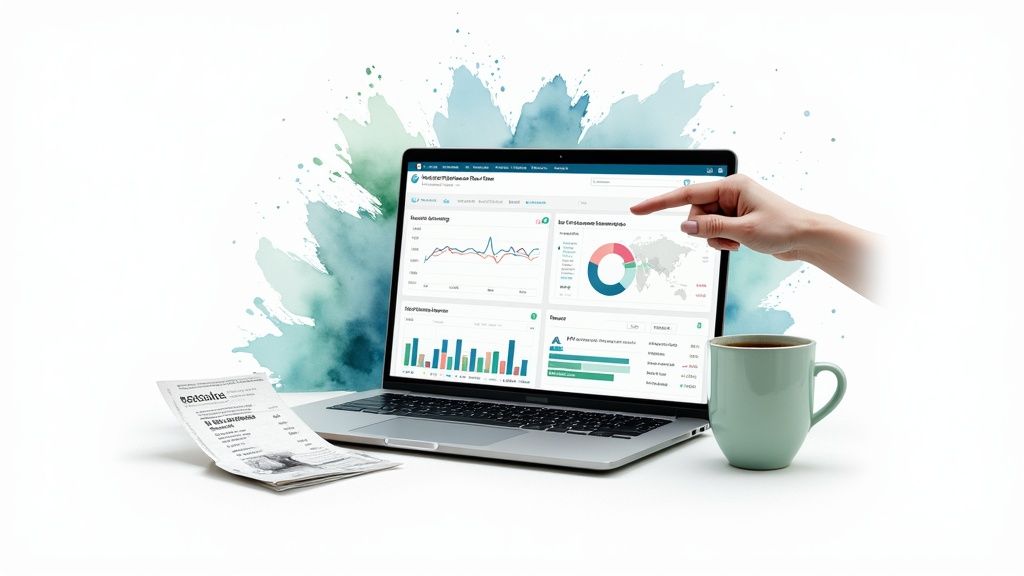
Any forecast is only as reliable as the information you feed it. If you want to get a real handle on your cash flow, you need to start with a crystal-clear picture of your finances. Guesswork just won’t do the job.
This is all about gathering the right information to see where your money is actually going. You’re looking for clean, organised data that reflects the true state of play in your business.
Where to Find the Numbers That Matter
Your accounting software is mission control, but the crucial data comes from a few key sources. To build a forecast you can trust, you absolutely need to pull from these places:
- Bank Statements: This is the ground truth. It shows every dollar that has physically entered or left your account, leaving no room for assumptions.
- Sales Records: Your sales history is the bedrock for projecting future income. You’ll want to look for trends, seasonal peaks and troughs, and what your average customer spends.
- Accounts Receivable Reports: This report is your cheat sheet for incoming cash. It shows exactly who owes you money and, critically, when you can expect it to arrive.
- Accounts Payable Reports: On the flip side, this report details who you owe and when those bills are due. This forms the foundation for mapping out your cash outflows.
Think about a property investor in Auckland. When they review their records, they see that one tenant consistently pays rent on the 5th of the month, not the 1st. By factoring that real-world three-day delay into their forecast, they get a much more accurate picture of their cash position for the month ahead.
A solid forecast isn’t about gazing into a crystal ball. It’s about using high-quality, real-world data to make smart, logical projections about what’s most likely to happen next.
This organised data is the bedrock of a forecast you can actually rely on to make big decisions. For a deeper dive into this, check out our guide on how financial forecasting helps NZ businesses plan.
Getting Started: How to Build Your First Cash Flow Forecast
Alright, let’s get practical. Building your first cash flow forecast doesn’t have to be a massive, complicated task. A simple 13-week outlook is an incredibly powerful starting point. I always recommend this timeframe because it gives you immediate, actionable insight into the real financial rhythm of your business.
You can kick things off with a basic spreadsheet or use the forecasting tools built into accounting software like Xero. The whole exercise really boils down to two key activities: figuring out all the cash you expect to come in (inflows) and listing all the cash that’s scheduled to go out (outflows).
Mapping Out Your Cash Inflows
First, let’s look at the money coming in. It’s crucial to think beyond just daily sales. To get a truly accurate picture, you need to list every single potential source of cash.
- Sales Revenue: Dig into your historical sales data to project your weekly income. This needs to be based on reality, not just wishful thinking.
- Customer Payments: Pull up your accounts receivable list. When are those outstanding invoices actually due to be paid? Don’t just assume they’ll pay on time.
- Other Income: Are you selling an old company vehicle? Expecting a tax refund? Got a loan drawdown coming? Factor it all in.
Think of it like this: if you run a café, you might forecast your weekly sales based on what you did this time last year, but you’d also adjust for that recent price increase. Then, you’d specifically slot in the payment for that big catering job into week four, because that’s when the 30-day invoice is actually due. It’s all about mapping when the money is set to hit your bank account.
The goal here is to get away from pure guesswork. If you want to explore different ways to estimate your future cash position, this guide on 7 Powerful Cash Flow Forecasting Methods is a great resource.
Itemising Your Cash Outflows
Next up, the expenses. This is where meticulous detail pays off. Forgetting even small, recurring costs can throw your whole forecast off and lead to nasty surprises down the line.
Your list of outflows should be exhaustive:
- Fixed Costs: Things that don’t change month to month, like rent, insurance, software subscriptions, and set loan repayments.
- Variable Costs: This covers everything from supplier invoices and staff wages (don’t forget PAYE) to your marketing budget.
- Irregular Payments: These are the ones that often catch people out. Make sure you’ve scheduled in your quarterly GST and provisional tax payments.
If you get stuck or just aren’t confident that your numbers are telling the right story, please don’t struggle alone. At Business Like NZ Ltd, we’re a team of affordable, down-to-earth chartered accountants supporting Auckland businesses and property investors every day. We can work with you to build a forecast that gives you genuine clarity and puts you back in control.
Using Your Forecast to Make Smarter Business Decisions
Putting together a cash flow forecast is a great first step, but the real magic happens when you start using it to guide your decisions. Think of it less as a report and more as your business’s financial roadmap, showing you potential speed bumps and opportunities well before they appear on the horizon.
It’s your early warning system. If your forecast shows a potential cash shortfall in eight weeks, you have plenty of time to do something about it now. You could run a sales promotion to bring in extra revenue, hold off on buying that new piece of equipment, or get a bit stricter with your invoicing process.
Turning Data Into Actionable Insights
A good place to start is by looking at simple but powerful metrics like your Debtor Days. This number tells you, on average, how long your customers are taking to pay you. For example, if your standard terms are 20 days but your Debtor Days are sitting at 45, that’s a red flag. It means your cash is tied up in unpaid invoices, which can really put a strain on your finances. We cover more strategies to improve your business cash flow in our detailed guide.
Another brilliant technique is scenario planning. This isn’t as complicated as it sounds. It just means creating a few different versions of your forecast: best-case, worst-case, and most-likely. What happens if a major client pays late? What if a tourism boom pushes your sales up by 20%? Playing out these possibilities helps you prepare mentally and financially for whatever comes your way.
Regularly comparing your forecast to your actual results is non-negotiable. This practice—known as variance analysis—is what turns your forecast from a static document into a dynamic tool for smart business decisions.
The recent pandemic was a tough lesson for many NZ businesses on how quickly external shocks can drain cash reserves. It really hammered home why having a solid forecast is vital for both survival and growth. This kind of planning is what helps a business move from just getting by to properly succeeding.
If you’re looking at your forecast and it all feels a bit overwhelming, we can help. At Business Like NZ Ltd, we’re a team of affordable, down-to-earth chartered accountants supporting Auckland businesses and property investors. We specialise in turning your numbers into a clear, actionable plan for the future.
Need an Expert to Help with Your Business Finances?
Getting a real handle on your cash flow is one of the most powerful moves you can make as a business owner. It’s the difference between constantly reacting to financial surprises and proactively steering your business towards its goals. That clarity gives you the confidence to make smart calls on everything from hiring to new investments.
But here’s the thing: you don’t have to go it alone. Even the New Zealand government keeps a close eye on its cash flow, using detailed tracking to manage its finances and borrowing to cover gaps between income and spending. You can actually see this in their official financial statements right here. If it’s a critical practice for them, it’s absolutely vital for your business too.
If you’re feeling a bit snowed under by the numbers, we can help. At Business Like NZ Ltd, we’re affordable, down-to-earth chartered accountants supporting Auckland businesses and property investors. We’ll help you get your systems sorted, build a forecast you can actually rely on, and find that financial confidence you need to grow.
Gaining control over your cash flow isn’t just about the numbers; it’s about securing the freedom to build the business you’ve always wanted.
Flick us a message for a no-obligation chat. Let’s see how we can help your business thrive.
Cash Flow Management and Forecasting – Common Questions Answered
When it comes to cash flow, a few questions pop up time and time again with the Auckland business owners we work with. Let’s tackle some of the most common ones.
How Often Should I Be Looking at My Forecast?
For most businesses, a monthly update is the sweet spot. It’s regular enough to catch problems before they snowball but not so frequent that it becomes a chore. A quick weekly check-in is also a great habit.
But this isn’t a one-size-fits-all rule. If your business is seasonal (think tourism or retail during the holidays), or you’re just in a tight spot with cash, you’ll want to be all over it weekly. The rhythm of your business dictates the rhythm of your forecasting.
What’s the Biggest Forecasting Mistake People Make?
Hands down, it’s wishful thinking. So many business owners fall into the trap of basing their forecast on best-case sales figures while glossing over or underestimating their expenses. Optimism is great, but it can be dangerous when it comes to cash.
The antidote is reality. Ground your forecast in what’s actually happened in the past, not just what you hope will happen. Always, always build in a buffer for those curveballs life loves to throw. A good way to do this is to map out a few different scenarios: best-case, worst-case, and a realistic middle ground. It prepares you for anything.
Do I Really Need an Accountant for Cash Flow Management and Forecasting?
Not necessarily to get started. You can absolutely get the ball rolling yourself with a simple spreadsheet or by using the forecasting tools built into software like Xero. Understanding the fundamentals of your own cash flow is a massive advantage for any owner.
So where does an accountant fit in? We bring a fresh, expert perspective. Think of us as a strategic partner who can spot trends you might have missed, challenge your assumptions, and help you make bigger, better decisions based on what the numbers are really saying.
Feeling a bit lost in the numbers, or just want a professional to sanity-check your forecast? At Business Like NZ Ltd, we’re affordable, down-to-earth chartered accountants supporting Auckland businesses and property investors to gain clarity and confidence. Let’s have a chat—no strings attached. Find out how we can help at https://businesslike.co.nz.